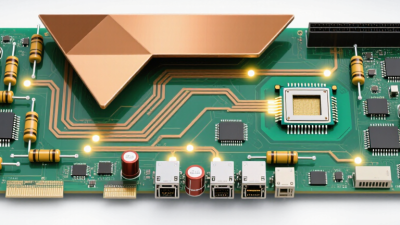
WORLD electronics offers a complete line of electronic circuit board manufacturing and assembly services, as well as advanced manufacturing services. Our commitment to quality and service is second to no supplier.
Learn MoreOur team of engineers assists you in the development of new designs to optimize quality manufacturability (DFM) and testability, resulting in cost minimization and reduced product development time.
Learn MoreOur flexible manufacturing floor layout and highly trained staff allow for Quick Set-up and Tear Down of small volume prototype runs. This combination grants our customers the benefit of turning new designs quickly and accurately.
Learn MoreWORLD electronics is dedicated to quality. This quality is what underpins our commitment to thorough testing. Our engineers can develop a set of tests that ensure reliability and high performance in all products.
Learn MoreSupply chain management has crossed over from being a narrow management function to being a key operational function.
Learn MoreChoosing the best PCB electronics supplier is not simply a pricing exercise. It is a decision about quality, communication, production stability, and long-term risk. A reliable supplier should understand your design, not merely manufacture the files you send.
Tara Dunn, a respected PCB industry consultant and president of Omni PCB, has said, “The right supplier becomes an extension of your engineering team.” This principle matters when a board includes fine-pitch components, controlled impedance, dense vias, or demanding thermal requirements. A capable partner can identify manufacturability concerns before they become expensive revisions. That conversation may happen over a marked-up Gerber file, a stack-up drawing, or a short engineering call.
Look beyond the quoted unit price. Examine certifications, material traceability, inspection methods, and actual production capacity. Ask whether the factory performs electrical testing, automated optical inspection, and first-article verification. Request evidence, not attractive promises. A clean sample does not prove consistent volume performance.
Experience also matters. Suppliers should explain lead times clearly and identify risks before accepting an order. Their answers should remain consistent across sales, engineering, and production teams. If every question receives a vague reply, pause.
A low quote can be a trap.
Still, no supplier-selection checklist is perfect. Unexpected delays, material shortages, or design changes can expose weak partnerships. The strongest PCB electronics supplier communicates early, documents decisions, and helps your team make practical trade-offs. Reliability is built through repeated evidence, not polished marketing language.

Choosing the best PCB electronics supplier starts with a precise project definition. Before requesting quotes, record the board type, layer count, dimensions, materials, copper weight, and surface finish. Include impedance targets, quantity, prototype needs, and delivery dates. Keep it practical. Attach updated schematics, layout files, fabrication drawings, and assembly data. A supplier should not guess when critical information is missing.
Supplier expectations must be measurable. Ask how engineers review design files before production. Request details about inspection equipment, traceability, material certificates, and process controls. Clarify whether electrical testing, visual inspection, and sample approval are included. A professional quotation should separate tooling, testing, assembly, packaging, and shipping costs. Vague pricing creates problems later.
Discuss communication before placing an order. Define response times, engineering-change procedures, packaging requirements, and corrective-action reporting. Confirm how defects are documented and replaced. My own planning can be imperfect, especially when early quantities are uncertain. State that uncertainty openly. A realistic forecast is more useful than false precision. One low quote may hide limited testing or weak documentation. Ask for sample records and capability evidence, not attractive promises. Reliable suppliers explain limits clearly, because honest boundaries protect the board, schedule, and final product.

Evaluate Supplier Expertise, Manufacturing Capabilities, and Technology
Choosing a PCB supplier requires more than comparing unit prices. In my experience, technical expertise becomes visible during difficult design reviews. Ask whether engineers can explain stack-up choices, impedance control, thermal relief, and component spacing clearly. Their answers should include measurements, not vague promises. Review sample inspection reports, process records, and corrective-action examples. A capable team discusses risks before production begins.
Manufacturing capability must match your board’s real requirements. Check whether the facility handles fine-pitch components, multilayer boards, rigid-flex structures, or controlled-impedance traces. Inspect the production area if possible. Look for organized material storage, calibrated testing equipment, and clear operator instructions. Ask about solder-paste inspection, automated optical inspection, X-ray testing, and electrical testing. Small details matter.
Traceability matters too. Each batch should connect to material certificates, process data, and inspection results. This supports reliable investigations when a field issue appears. However, an impressive factory tour can still hide weak communication. That happened during one evaluation I observed. The pilot boards passed testing, but engineering questions waited several days. A practical trial order can reveal this weakness. Measure response times, revision accuracy, packaging quality, and delivery consistency. Supplier technology matters, but disciplined people operate it. Certification helps, though it cannot replace evidence from actual production.
Choosing a PCB electronics supplier starts with its quality system, not its glossy catalog. The ISO Survey 2023 recorded more than 1.2 million ISO 9001 certificates worldwide. That scale proves certification is common, not automatically meaningful. Ask for the certificate scope, issuing body, expiry date, and manufacturing site. A certificate covering only office administration deserves careful scrutiny.
Look for controlled procedures covering incoming inspection, traceability, process changes, and nonconforming material. Request sample records, not promises. For bare boards, compare inspection methods with IPC-6012 and IPC-A-600 requirements. For assembled boards, review soldering controls, operator training, and rework limits. Testing should include continuity, isolation, automated optical inspection, and functional testing when applicable. IPC’s electronics industry research repeatedly identifies component shortages and quality risks as major supply-chain concerns. Traceability matters when a small batch fails months later.
Ask how failures are investigated. A credible supplier can provide anonymized corrective-action reports, failure images, and retest evidence. Test equipment should show calibration status and due dates. Environmental claims also need measurable limits, such as temperature cycling, humidity exposure, or vibration profiles. Do not accept “100% tested” without defining the test coverage. I would still retain incoming inspection, even with an approved supplier. Trust can reduce checks, but it should not erase them.
Choosing a PCB electronics supplier requires more than comparing unit prices. I have learned that a low quote can hide tooling charges, inspection fees, or expensive shipping. Ask for a detailed quotation with material grades, testing costs, taxes, and payment terms. Then compare the total landed cost, not just the board price. A small price difference may protect your production budget later.
Lead times should be measured against real production conditions. Request separate timelines for engineering samples, pilot batches, and volume orders. Confirm capacity during holiday periods and material shortages. A supplier who promises seven days without explaining the process may be guessing. This matters. Communication matters too. During evaluation, note how quickly the supplier answers technical questions. Clear replies, updated drawings, and written change records reduce costly misunderstandings.
Supply chain reliability needs evidence. Ask how suppliers track components, verify incoming materials, and manage approved alternatives. Request production updates, inspection reports, and shipment tracking before placing a large order. A stable supplier should explain its backup plans for critical components and unexpected machine downtime. Silence is expensive. I once accepted an attractive quote without checking component availability, and the project slipped by three weeks. That mistake changed my checklist. Now, I review payment terms, escalation contacts, quality records, and recovery plans together. The best choice may not be the cheapest or fastest. It is the supplier that communicates honestly when conditions change.
Choosing a PCB electronics supplier requires more than comparing unit prices. Long-term partnership potential deserves equal attention. McKinsey’s 2024 B2B Pulse found that 71% of buyers expect personalized interactions, while 76% become frustrated without them. A capable supplier should understand your board’s revision history, production risks, and delivery priorities.
Ask how support works after shipment. Can you reach an applications engineer directly? Does the supplier provide failure analysis, corrective-action reports, and replacement timelines? Request a sample escalation process. It should identify a contact, response target, evidence required, and final resolution owner. Small details matter. A clear ticket number beats a crowded inbox.
The IPC Global Sentiment of the Electronics Industry reports regularly highlight continuing concerns about material availability, labor, and delivery performance. Therefore, assess the supplier’s traceability and contingency planning. Check whether they document lot numbers, inspection results, component substitutions, and engineering-change approvals. Salesforce’s State of Service research reports that 85% of customers consider the experience as important as the product or service itself. After-sales support is not decoration.
I would also test the relationship before signing a large contract. Send a technical question with a realistic deadline. Measure the answer’s accuracy, speed, and ownership. A polished presentation can hide weak execution. That mistake is easy to make. Review references from customers with similar board complexity, volume, and regulatory needs. Choose a partner willing to discuss failures openly, not one promising perfection.
Assess long-term partnership potential and after-sales support using measurable procurement criteria. The scores below represent a practical evidence-based evaluation framework, with each category rated out of 100.
Prioritize suppliers that can demonstrate stable quality systems, transparent communication, dependable delivery, engineering collaboration, and clearly defined after-sales processes.