China Top 10 Thread Rod Manufacturers to Buy From?

Blog

China Top 10 Thread Rod Manufacturers to Buy From?

Choosing the right Thread Rod manufacturer is not a simple popularity contest. It is a purchasing decision tied to load safety, thread accuracy, corrosion resistance, and delivery reliability. A rod may look perfect under warehouse lighting, yet fail inspection when its threads bind against a galvanized nut.

This guide examines ten established manufacturers and suppliers serving construction, industrial maintenance, infrastructure, and equipment assembly. The selection considers material grades, dimensional control, coating quality, production capacity, certification practices, and customer support. Where available, readers should verify mill certificates, tensile test results, coating specifications, and batch traceability before placing large orders. Product descriptions alone are not enough.

Bill Eccles, a recognized fastener engineering specialist, emphasizes a practical principle: “The thread is only one part of the joint.” That warning deserves attention. Thread Rod performance also depends on nut compatibility, embedment depth, installation torque, washer selection, and the surrounding material. A strong manufacturer should explain these details, not merely quote a low price.

The companies discussed here are not ranked by advertising visibility. They are compared through a buyer’s lens: consistent dimensions, responsive technical teams, dependable packaging, and realistic lead times. Some suppliers perform exceptionally well for standard carbon-steel rods. Others are better suited to stainless steel, high-temperature equipment, or custom lengths.

No list can fit every project. That is the uncomfortable part. Local standards, environmental exposure, and engineering requirements may change the best choice. Buyers should still request current documentation and independent verification before committing funds.
China Top 10 Thread Rod Manufacturers to Buy From?

What Thread Rod Is and Where It Is Used

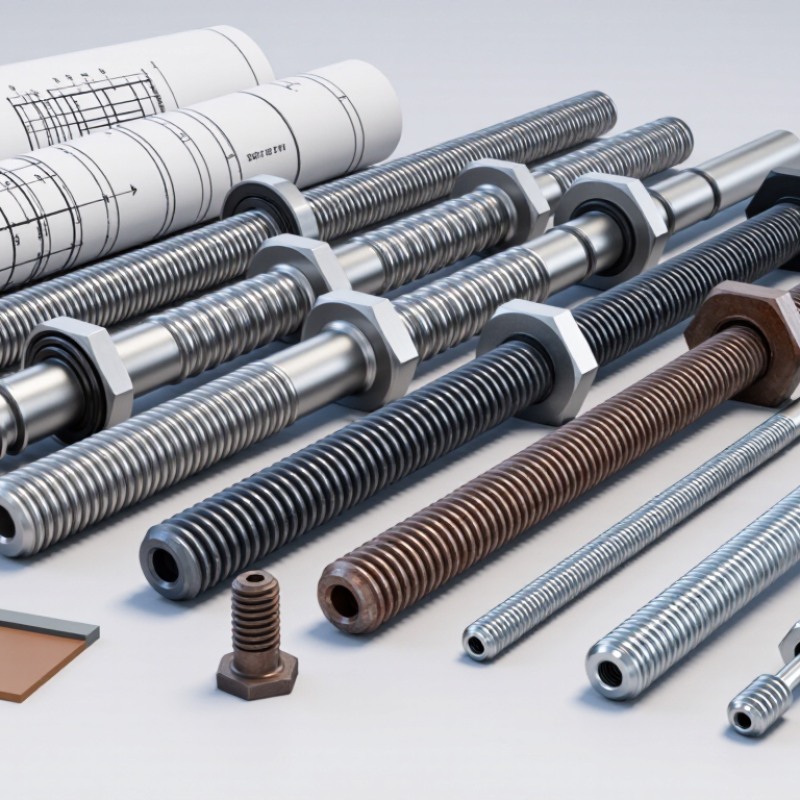
Thread rods are long, straight fasteners with continuous threads running across their length. Unlike ordinary bolts, they usually have no fixed head. Nuts, washers, and chemical anchors help secure them in place. Their simple shape makes them useful in construction, machinery, and maintenance work.

In China’s fastener market, many manufacturers produce thread rods for different applications. Buyers should check steel grade, thread accuracy, surface finish, tensile strength, and production records. Galvanized rods resist moisture better, while stainless steel suits corrosive environments. Black or zinc-plated steel may fit indoor projects. Selecting by price alone can create problems. I have seen poorly matched rods bend during installation, especially when workers use excessive torque.

Tips: Confirm the diameter, thread pitch, length, and coating before ordering. Ask for inspection reports and sample pieces. Check whether the threads accept standard nuts smoothly. A small test can reveal large quality issues. Also, review packaging carefully. Bent rods or damaged threads may become unusable on site. Standards can vary between projects, so compare the supplier’s documents with the engineer’s requirements. That step is easy to overlook.

How to Evaluate Thread Rod Manufacturers in China

Choosing among China’s top thread rod manufacturers requires more than comparing prices. A dependable supplier should explain its steel grades, production limits, and thread standards clearly. Ask for recent material certificates, heat numbers, and inspection records. These documents help connect each shipment to its original steel batch.

Request samples before placing a large order. Measure diameter, pitch, straightness, and thread length with calibrated tools. A go/no-go gauge can reveal damaged or incomplete threads quickly. Check tensile performance through independent testing when the rods serve structural or high-load applications. Plating or coating thickness also deserves attention, especially for outdoor use. Small surface flaws may become serious corrosion points.

Visit the facility if possible, or arrange a detailed video audit. Look for organized storage, labeled materials, maintained rolling equipment, and separate inspection areas. Ask how workers handle rejected parts. Their answer often reveals more than a polished presentation. Production capacity should match your schedule, not merely sound impressive. Confirm packaging details, batch traceability, replacement procedures, and communication after shipment.

No checklist is perfect. A supplier may pass an audit yet struggle during a sudden volume increase. I would place a controlled trial order and review its dimensional consistency, packaging condition, and delivery accuracy. Clear technical drawings reduce misunderstandings. Vague promises do not. Evaluate evidence, not confidence.

China’s Top 10 Thread Rod Manufacturers to Consider

China’s Top 10 Thread Rod Manufacturers to Consider

Choosing among China’s top 10 thread rod manufacturers requires more than comparing prices. A dependable supplier should show consistent thread accuracy, material certificates, and clear production records. During factory evaluations, inspect steel coils, cutting equipment, thread gauges, and corrosion protection processes. A sample rod should fit its matching nut smoothly, without rough starts or damaged threads. Small defects become expensive during installation.

Ask whether the manufacturer produces fully threaded rods, double-end studs, or custom lengths. Confirm grades, diameters, finishes, packaging, and minimum order quantities in writing. Reliable factories usually provide inspection reports, batch identification, and realistic delivery schedules. Check whether their testing covers tensile strength, hardness, coating thickness, and dimensional tolerance. A polished catalog is not enough. I have seen attractive samples fail when bulk production begins, so repeated sampling matters.

Tips: Request samples from several shortlisted manufacturers. Measure thread pitch with a gauge. Compare zinc coating under strong light. Ask for recent test records, not old templates. Discuss carton strength and moisture protection before shipping. Keep one approved sample for future inspection. The cheapest offer may become costly after rejected batches, yet higher prices do not guarantee perfection. A second-party inspection can reveal issues your first review misses.

How to Compare Products, Prices, and Customization Options

When comparing China’s top 10 thread rod manufacturers, start with product consistency, not catalog size. Check diameter tolerance, thread accuracy, tensile strength, and surface finish. A practical test uses a calibrated thread gauge and a sample nut. The rod should fit smoothly without excessive play. Ask for material certificates and inspection records. These documents support reliable purchasing decisions.

Price comparisons need more detail than the unit quote. Include tooling, packaging, shipping, testing, and possible rework costs. A cheaper rod may use thinner zinc coating or weaker steel. Request prices for the same grade, length, diameter, and order quantity. I once focused too heavily on the lowest offer. The final cost rose after stricter inspection. That mistake still influences my buying checklist.

Tips: Request three samples before approving a large order. Compare coating thickness, thread cleanliness, straightness, and packing strength. For customized rods, confirm drawings, thread length, cutting tolerance, heat treatment, and minimum order quantity. Ask about lead time for new tooling. Keep every specification in writing. Customization sounds flexible, but small changes can affect production schedules and waste. Also, do not assume a factory understands an unclear drawing; confirm critical dimensions with a marked sample.

China Top 10 Thread Rod Manufacturers to Buy From? – How to Compare Products, Prices, and Customization Options

Anonymous market comparison of commonly available China-made threaded-rod product categories. The ranking is a practical buying reference based on specification coverage, customization potential, typical application suitability, and indicative export pricing—not a verified ranking of individual companies.

No. Product Category Common Material and Grade Typical Size Range Applicable Standards Surface Finish Typical Tensile Strength Indicative FOB Price* Customization Options Typical MOQ Estimated Production Lead Time Best-Suited Applications Comparison Rating
1 Carbon Steel Fully Threaded Rod Low-carbon steel, commonly equivalent to ASTM A36 or Grade 4.8 M6–M30; standard lengths of 1 m, 2 m, and 3 m DIN 976-1, ISO 898-1, ASTM A36 Plain, zinc plated, or hot-dip galvanized Approximately 400–550 MPa, depending on grade US$0.35–3.20 per piece Cut-to-length service, custom threading, chamfering, packaging, and private-label cartons 500–1,000 pieces 15–25 days General construction, pipe supports, HVAC suspension, and machinery installation ★★★★★
2 High-Strength Threaded Rod Medium-carbon alloy steel, Grade 8.8 or comparable high-strength steel M8–M36; custom lengths up to approximately 3 m ISO 898-1, DIN 976-1, ASTM F1554 where specified Plain, zinc plated, black oxide, or hot-dip galvanized Approximately 800–1,000 MPa US$1.20–9.50 per piece Special lengths, rolled or cut threads, reduced shanks, identification marks, and test certificates 300–800 pieces 20–30 days Structural connections, heavy equipment, steel fabrication, and anchoring systems ★★★★★
3 Stainless Steel Threaded Rod A2-70 stainless steel, generally comparable to AISI 304 M4–M30; standard lengths of 1 m and 2 m DIN 976-1, ISO 3506-1, ASTM F593 where specified Natural stainless, bright finish, or polished finish Minimum tensile strength commonly around 700 MPa US$1.50–18.00 per piece Custom lengths, fine pitch, polished surface, laser marking, protective film, and corrosion-test reports 200–500 pieces 20–35 days Food-processing equipment, architectural systems, outdoor installations, and general corrosion-resistant assembly ★★★★★
4 Marine-Grade Stainless Threaded Rod A4-70 or A4-80 stainless steel, generally comparable to AISI 316 or 316L M6–M30; lengths from 100 mm to 3 m ISO 3506-1, DIN 976-1, ASTM F593 where specified Natural stainless or polished finish Approximately 700–800 MPa, depending on class US$2.50–28.00 per piece Low-magnetic material, custom pitch, special lengths, passivation, and material traceability documents 100–300 pieces 25–40 days Marine construction, coastal infrastructure, chemical processing, and wastewater facilities ★★★★☆
5 Hot-Dip Galvanized Threaded Rod Carbon steel, commonly Grade 4.8 or ASTM A36 equivalent M8–M36; standard lengths of 1 m, 2 m, and 3 m DIN 976-1, ISO 1461 for galvanized coating, ISO 898-1 Hot-dip galvanized; coating thickness depends on process and specification Approximately 400–550 MPa US$0.80–7.50 per piece Specified zinc coating thickness, custom lengths, thread-protection caps, batch marking, and salt-spray testing 300–800 pieces 20–35 days Outdoor steelwork, solar mounting, utility infrastructure, and exposed construction environments ★★★★☆
6 Zinc-Plated Threaded Rod Low-carbon steel, Grade 4.8 or equivalent commercial steel M6–M24; lengths from 100 mm to 3 m DIN 976-1, ISO 898-1, ISO 4042 for electroplated coatings Electro-zinc plated, commonly clear or yellow passivated Approximately 400–550 MPa US$0.25–2.80 per piece Custom lengths, plating thickness, thread direction, bundled packing, and corrosion-resistance testing 500–2,000 pieces 12–25 days Indoor assembly, electrical installation, light-duty supports, and general hardware distribution ★★★★☆
7 All-Thread Stud for High-Temperature Service Alloy steel, commonly ASTM A193 Grade B7 or comparable grade ¼ in–2 in; metric equivalents available ASTM A193, ASME B1.1, ASME B18.31.2 Plain, black oxide, zinc plated, or fluoropolymer-coated Minimum tensile strength commonly around 860 MPa US$2.00–30.00 per piece Custom lengths, heat treatment, hardness testing, mill certificates, thread gauges, and lot traceability 100–300 pieces 25–45 days Pressure vessels, petrochemical equipment, flanges, boilers, and high-temperature piping ★★★★☆
8 Concrete Anchor Threaded Rod High-strength carbon steel, commonly Grade 8.8 or ASTM F1554 Grade 36/55 where specified M10–M30; typical lengths of 200–1,500 mm ISO 898-1, ASTM F1554, ACI 318 design requirements where applicable Plain, zinc plated, hot-dip galvanized, or epoxy-coated Approximately 550–1,000 MPa, depending on grade US$1.50–15.00 per piece Custom embedment length, nut and washer kits, thread protection, color coding, and pull-out test documentation 200–500 pieces 20–35 days Base plates, equipment foundations, structural columns, and post-installed anchoring ★★★★☆
9 Fine-Pitch Threaded Rod Carbon steel, alloy steel, or stainless steel according to required strength and corrosion resistance M6–M24; UNF and metric fine-pitch options ISO 262, ISO 965, ASME B1.1, DIN 976-1 Plain, zinc plated, black oxide, or stainless steel natural finish Approximately 400–1,000 MPa, depending on material grade US$1.00–14.00 per piece Custom pitch, left-hand thread, partial threading, precision cutting, inspection reports, and special packaging 100–500 pieces 25–40 days Precision machinery, automotive fixtures, adjustment mechanisms, and high-load clamping assemblies ★★★★☆
10 Custom-Length and Special-Thread Rod Material selected from carbon steel, alloy steel, stainless steel, brass, or other approved alloys M3–M48; customer-defined lengths and thread configurations ISO, DIN, ASTM, ASME, or customer drawings Plain, plated, galvanized, coated, passivated, or polished Specified according to material, heat treatment, and engineering requirement US$1.00–45.00 per piece Nonstandard pitch, stepped diameter, left-hand thread, slots, holes, chamfers, heat treatment, marking, and inspection plans 50–300 pieces 30–60 days OEM components, engineered assemblies, replacement parts, and low-volume industrial projects ★★★☆☆
*Indicative FOB China price ranges for commonly traded quantities and standard configurations. Actual prices vary according to raw-material costs, diameter, length, grade, coating thickness, order volume, testing requirements, packaging, exchange rates, and shipping terms. Buyers should request a current quotation, material certificate, dimensional inspection report, and coating or salt-spray test report before placing an order.

How to Verify Quality and Place a Safe Order

China’s large steel base does not automatically make every thread rod reliable. World Steel Association statistics recorded about 1.883 billion tonnes of crude steel worldwide in 2024, with China producing roughly 1.005 billion tonnes. Scale creates choice, not proof. I would screen the top ten suppliers by batch evidence, not search ranking.

Ask for a material certificate showing the heat number, chemical composition, tensile strength, yield strength, and elongation. Match that heat number to the rod, label, and packing list. For general carbon steel rods, compare results with ISO 898-1. For structural anchor rods, review the applicable ASTM F1554 grade. Check thread accuracy with calibrated gauges. Measure coating thickness at several points. A clean certificate is not enough. Independent laboratory testing remains safer.

Place a small trial order before committing to container volume. Write the diameter, length, thread tolerance, finish, packaging, inspection method, and rejection terms into the contract. Require photos of marked bundles before shipment. Keep payment staged around production and inspection, where commercially practical. Confirm the supplier’s legal company name, factory address, export documents, and traceability process. Do not rely on chat promises. A factory may pass one inspection and fail the next; sampling is imperfect. That uncomfortable possibility deserves a contingency plan.