China Top 10 Nitrile O Rings Manufacturers?
China’s nitrile sealing industry has grown from basic molded parts to highly engineered components for pumps, valves, hydraulics, and industrial machinery. This guide examines China’s top 10 Nitrile O Rings manufacturers through practical criteria, not advertising claims. Production capacity matters. So do compound control, mold precision, testing, and delivery reliability.
A credible supplier should explain its NBR formulation clearly. It should provide hardness data, dimensional inspection records, and batch traceability. Look for evidence of ISO 9001 systems, laboratory testing, and experience with oil, fuel, and hydraulic applications. Ask about acrylonitrile content, temperature limits, compression set, and storage conditions. Small details often reveal large differences.
Dr. Robert Flitney, a recognized sealing specialist and author of Seals and Sealing Technology, has stated, “A seal is only as good as the system in which it operates.” That principle guides this comparison. Even an excellent Nitrile O Rings manufacturer cannot correct poor groove design, excessive shaft eccentricity, or incompatible fluids. The ranking therefore considers both product quality and engineering support.
Some conclusions remain imperfect. Public factory data can be incomplete. Supplier capabilities may also change. A company with impressive machinery may still struggle with communication or consistency. Conversely, a smaller manufacturer may offer stronger customization and faster technical feedback. Buyers should verify samples, inspection reports, and recent customer references before making a final decision. This overview is a starting point, not a substitute for application testing.
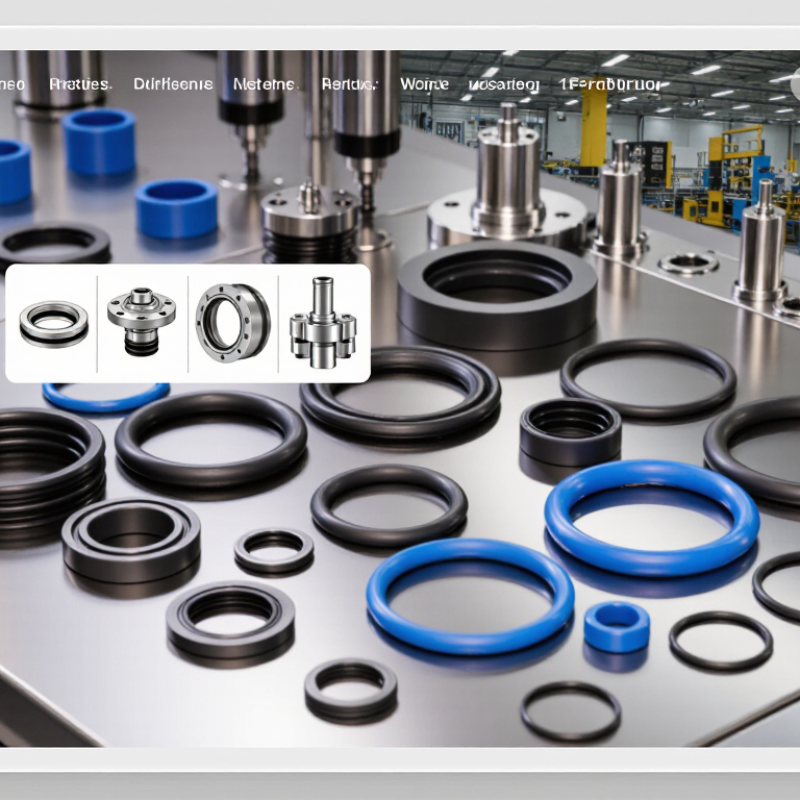
What Are Nitrile O Rings and Why Are They Widely Used?
Nitrile O rings are elastic sealing components made from nitrile rubber, also called NBR. They are molded into circular profiles for sealing gaps between stationary or moving parts. In practical equipment inspections, they often appear in pumps, hydraulic cylinders, valves, and fuel-handling assemblies. Their simple shape supports fast installation and predictable maintenance.
Nitrile rubber performs well against petroleum oils, mineral-based fluids, and many hydraulic liquids. It also offers useful resistance to abrasion and compression, which helps maintain sealing pressure during repeated operation. They are widely used because they combine dependable performance with moderate cost. That balance matters. A properly sized ring can prevent leakage around a shaft, fitting, or flange without complicated hardware.
Their limitation matters too. Nitrile O rings may harden in high heat, outdoor ozone, or strong chemical environments. Material grade, hardness, temperature range, groove design, and surface finish should be checked together. During production, accurate dimensions and controlled curing reduce early failure. A ring that looks perfect may still leak after installation. In my experience, poor lubrication or a twisted seal causes more trouble than expected. That assumption deserves review. Careful inspection remains essential, especially where pressure changes, vibration, or frequent servicing can damage the sealing surface.
China’s Top 10 Nitrile O Ring Manufacturers and Their Strengths
China’s Top 10 Nitrile O-Ring Manufacturers and Their Strengths
China’s leading nitrile O-ring manufacturers compete through different strengths, not one universal ranking. The strongest suppliers usually offer tight dimensional control, automated molding, and compound testing. Several focus on oil-resistant NBR grades for pumps, valves, and hydraulic cylinders. Others specialize in custom tooling, small batches, or rapid prototype production. ISO 3601 remains a key reference for groove dimensions, tolerances, and inspection. However, some factories still rely too heavily on visual checks. That weakness deserves attention.
The top ten shortlist should also consider material traceability, batch records, and compression-set performance. NBR hardness commonly ranges from 70 to 90 Shore A in industrial applications. Higher hardness may improve extrusion resistance, but it can reduce sealing flexibility. The U.S. Department of Energy reports that compressed-air systems may lose 20–30% of output through leaks. Poorly selected O-rings can contribute to this waste. Supplier strength therefore includes testing under pressure, temperature, and chemical exposure, not only low pricing.
Tips: Request a certificate of analysis, hardness data, and compression-set results for every compound. Ask for samples from the actual production line. Confirm operating temperature, media compatibility, and storage conditions before approval. A supplier may perform well on standard sizes yet struggle with large-diameter rings. That difference is easy to miss.
Key Differences in Materials, Standards, Customization, and Production
When comparing China’s top 10 nitrile O-ring manufacturers, material selection should come first. Standard NBR suits mineral oils, hydraulic fluids, and general industrial sealing. Hydrogenated NBR offers better heat and ozone resistance, but usually costs more. A manufacturer should explain acrylonitrile content clearly. Higher content improves oil resistance, while lower content remains more flexible in cold conditions. This trade-off is often overlooked.
Standards reveal how seriously a factory controls quality. Ask for dimensional inspection records, compound traceability, hardness results, and compression-set data. ISO 3601 dimensions may support international interchangeability, but certification alone proves little. The testing method and sample quantity matter. Request batch-level reports, not attractive laboratory photographs. Small details matter.
Customization separates capable producers from simple traders. Experienced teams can adjust groove fit, surface finish, hardness, color, and packaging. They should also review temperature, pressure, fluid type, and installation movement before recommending a compound. Production quality depends on mixing, molding temperature, curing time, trimming, and final inspection. Automated equipment helps, but skilled operators still notice flash, cracks, and uneven edges. Some suppliers promise very short lead times. That sounds convenient. It may also suggest rushed curing or weak inspection. A better evaluation includes production samples, repeat-order consistency, tooling ownership, and communication during technical changes. No factory is perfect, and even a strong supplier may need corrective action after testing reveals unexpected swelling or compression loss.
How to Choose the Right Chinese Nitrile O Ring Supplier
Choosing among China’s top 10 nitrile O-ring manufacturers requires more than comparing prices. Grand View Research estimated the global nitrile rubber market at about USD 2.4 billion in 2023, with continued growth through 2030. This demand attracts capable factories and weaker traders. Ask whether the supplier actually molds O-rings or only resells them. Request factory photos, production capacity, audit records, and recent batch documents. Clear evidence matters.
Check the compound before discussing volume. Nitrile grades differ in acrylonitrile content, oil resistance, flexibility, and low-temperature performance. A supplier should provide hardness data, tensile strength, elongation, compression set, and temperature limits. These values should match ASTM D2000 or relevant ISO 3601 requirements. Request samples from the same compound and tooling planned for mass production. Inspect flash around the sealing line. Measure several pieces, not only one.
Traceability is equally important. Each carton should show batch number, material code, cure date, and inspection status. Ask for a certificate of analysis and independent test results when the application is critical. A low quotation may reflect efficient manufacturing, but it may also hide inconsistent rubber or poor dimensional control. I once treated price as proof of value; that judgment was too simple. Real supplier quality appears after repeated batches, not during one impressive factory visit.