What Is a Seal Screw and How Does It Work?

Blog

What Is a Seal Screw and How Does It Work?

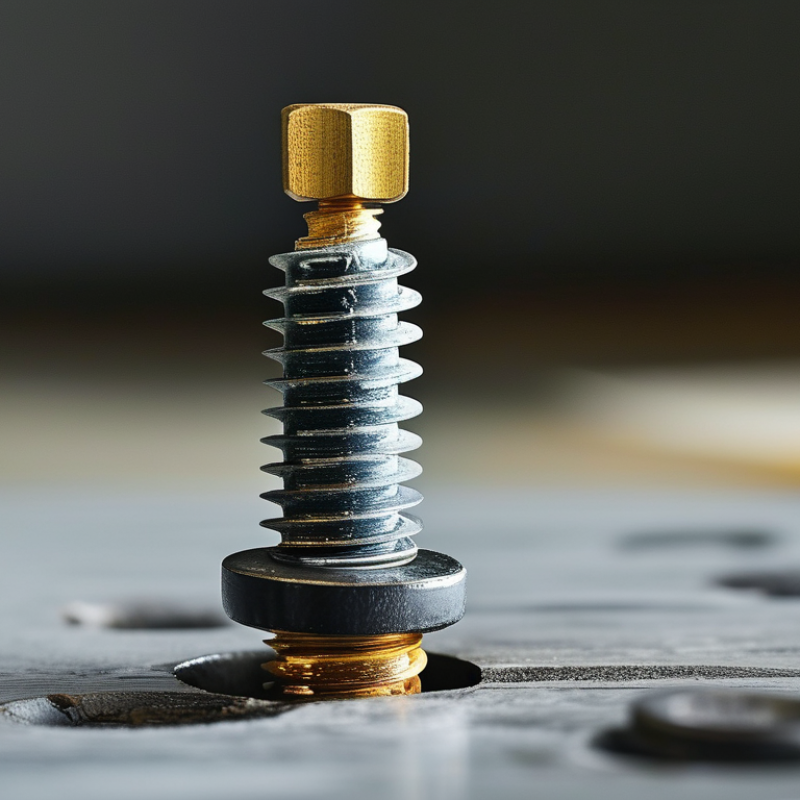
A Seal Screw is more than a threaded piece of metal. It is a fastening component designed to join materials while restricting the passage of water, air, dust, or process fluids. Its sealing function usually comes from an integrated washer, bonded elastomer, tapered shoulder, or specially formed head. When tightened, the screw creates clamping force and compresses the sealing element against the surface.

It looks simple.

However, the working principle deserves careful attention. The threads pull the materials together, while the compressed seal fills small surface irregularities around the screw hole. Imagine a metal panel with a rubber washer pressed firmly beneath its head. That contact line becomes the primary barrier against leakage. The result depends on torque, surface condition, seal material, thread quality, and installation angle.

Fastener engineer John H. Bickford is widely respected for his work on bolted joints. His practical principle is often expressed as: “A fastener must create and maintain clamping force.” This idea explains why a Seal Screw can fail even when it appears tight. Excessive torque may crush the seal. Insufficient torque may leave a visible leakage path. Vibration, temperature changes, corrosion, and material movement can also reduce sealing pressure over time.

A reliable selection process considers the substrate, operating temperature, fluid exposure, thread type, and required service life. Manufacturer torque data should guide installation, not guesswork. Field experience also matters. A clean mounting surface can make a surprising difference.

The term “sealed” is not absolute. Performance must be tested under realistic conditions. That is where engineering judgment remains essential.
What Is a Seal Screw and How Does It Work?

What Is a Seal Screw? Definition, Purpose, and Typical Applications

What Is a Seal Screw and How Does It Work?

What Is a Seal Screw? Definition, Purpose, and Typical Applications

A seal screw is a threaded fastener designed to close an opening while limiting leaks. Unlike a standard screw, it usually works with an O-ring, gasket, sealing washer, or tapered thread. The seal sits between mating surfaces. Tightening the screw creates controlled compression. This pressure blocks fluids, gases, dust, or moisture from passing through the joint.

A seal screw does more than hold parts together. It can protect internal components inside pumps, gearboxes, hydraulic blocks, electrical enclosures, and automotive systems. Technicians commonly select one for service ports, drain holes, inspection openings, and low-pressure fluid passages. Correct installation matters. The threads must match, and tightening torque should follow the component’s specifications. Excessive force can crush the seal or damage the housing.

Material compatibility also deserves attention. Oil, coolant, chemicals, heat, and vibration can affect sealing performance. Stainless steel may suit corrosive environments, while plated steel can fit less demanding equipment. However, no seal screw is a permanent answer. Seals age, threads wear, and contamination can create a leak path. A clean seat, an undamaged sealing element, and a careful inspection usually improve reliability. The term can be misleading, too. Some seal screws provide excellent protection, but they are not automatically pressure-rated components. Engineers should verify pressure, temperature, installation direction, and maintenance needs before approval.

Main Components: Threads, Sealing Rings, Heads, and Drive Systems

A seal screw combines fastening and fluid protection in one compact part. Its threads create axial clamping force, while the sealing ring closes the small gap beneath the head. Metric threads commonly follow ISO 965 tolerances, but thread fit alone does not stop leakage. The ring does that work. A 2024 global fasteners market report estimated the sector above 90 billion US dollars, with demand rising for corrosion-resistant and traceable components. That growth reflects a practical issue: small sealing failures can cause expensive equipment downtime.

The sealing ring may be elastomeric, metal, or bonded to a washer. Material choice depends on temperature, pressure, chemicals, and compression. ISO 3601 provides dimensional guidance for many O-rings, yet correct size is only part of the answer. Surface scratches, uneven torque, or excessive compression can damage the seal. It happens more often than installation manuals suggest. A useful check is to inspect the ring for cuts and confirm its seating groove is clean.

The head transfers installation force. Hex, socket, and slotted heads suit different access conditions. The drive system must match the tool and required torque. Too little torque leaves a leak path; too much can crush the ring or distort the joint. NASA fastener guidance repeatedly emphasizes controlled torque, clean threads, and verification records for reliable joints. In field work, these details matter. A perfect screw can still fail when the operator cannot reach the head squarely. That limitation deserves more attention.

What Is a Seal Screw and How Does It Work?

A seal screw combines a threaded fastener with a sealing ring to create mechanical clamping and reduce the passage of liquids, gases, dust, or other contaminants.

Thread Size Reference

The chart compares nominal diameter and pitch for common ISO metric coarse-thread sizes. Larger diameters generally provide a larger load-bearing area, while the pitch indicates the axial distance between adjacent threads.

  • Threads: Convert rotational torque into axial clamping force.
  • Sealing ring: Compresses against the mating surface to form the primary seal.
  • Head: Provides the bearing surface that transfers clamping force to the assembly.
  • Drive system: The hex, socket, Torx, or similar interface transfers installation torque.

How Seal Screws Work: Thread Engagement and Seal Compression

A seal screw combines thread engagement with controlled seal compression. Its threads carry the installation load, while a shoulder, O-ring, or sealing washer closes the leakage path. Engagement matters because short engagement can strip internal threads. ISO 898-1 and ASME B1.1 provide useful strength and thread geometry references, but neither standard defines one universal sealing depth.

Thread contact must be long enough to spread the load. In steel, designers often begin near one nominal diameter of engagement. Softer materials may require more. The screw should also compress the seal within its working range. Too little compression leaves a leak channel. Too much compression can flatten the seal, increase torque, or damage the sealing surface. NASA Reference Publication 1228 notes that torque-based preload may vary by roughly 25%, mainly because friction changes. That variation is easy to underestimate. Real assemblies are rarely perfect.

Tips: Measure actual clamp load when leakage is critical. Follow the seal supplier’s compression limits, not guesswork. Clean both contact surfaces. Check thread depth with a gauge. A thin washer can change compression noticeably. Recheck after temperature cycling. This step is often skipped. It should not be. ISO 16047 testing can help compare torque, friction, and achieved clamp force before production release.

Industry Data: ISO Metric Threads, 316L Steel, and IP68 Protection

What Is a Seal Screw and How Does It Work?

A seal screw closes an opening while resisting moisture, dust, vibration, and pressure changes. It usually combines an ISO metric thread with a gasket, O-ring, or bonded sealing washer. The thread supplies clamping force. The seal blocks the leakage path.

ISO 68-1 defines the basic profile for ISO metric threads, while ISO 965 specifies tolerance systems. This matters because poor thread fit can reduce sealing pressure. A parallel metric thread normally does not seal by itself. The sealing element needs a clean seat and controlled compression. Field experience shows that overtightening can damage the gasket or distort thin housings. That part is easy to underestimate.

Material choice affects service life. ASTM A240/A240M data lists 316L stainless steel with a maximum carbon content of 0.030% and molybdenum typically between 2.00% and 3.00%. This composition improves resistance to many chloride-containing environments, though it is not corrosion-proof. Scratches, stagnant water, and contamination still matter.

IP68 protection refers to IEC 60529 testing, but the exact immersion depth and duration require a stated product condition. IP68 is not one universal underwater rating. A sealed screw can support that enclosure rating only when installed correctly, with matching surfaces, proper torque, and an undamaged seal. Installation records are useful. Many failures begin with a missing washer.

What Is a Seal Screw and How Does It Work? — Industry Data: ISO Metric Threads, 316L Steel, and IP68 Protection
Data Category Specification or Dimension Industry Data How It Applies to a Seal Screw
Product Function Primary purpose Threaded fastening with environmental sealing A seal screw combines a conventional threaded fastener with an O-ring, bonded washer, captive sealing washer, or another sealing element to help close an enclosure opening.
Operating Principle Sealing mechanism Axial compression of a seal As the screw is tightened, the sealing element is compressed between the screw head or washer and the enclosure surface, reducing the path available for water and dust ingress.
Thread Standard ISO metric coarse thread M6 × 1.0, M8 × 1.25, M10 × 1.5, M12 × 1.75 The designation gives the nominal outside diameter in millimetres followed by the thread pitch in millimetres. Actual size selection depends on the enclosure design and required clamp load.
Thread Geometry Standard thread profile 60° ISO metric V-thread ISO metric screw threads use a 60-degree flank angle. Mating internal and external threads should use compatible tolerance classes and be free from contamination.
Common Material Stainless steel grade 316L austenitic stainless steel 316L is widely selected where improved corrosion resistance is needed, particularly in chloride-containing, humid, marine, chemical-processing, or washdown environments.
316L Chemistry Carbon content Maximum 0.03% by mass The low carbon level helps reduce the risk of sensitization during welding compared with standard 316 stainless steel, subject to proper fabrication practices.
316L Chemistry Chromium content Approximately 16–18% by mass Chromium supports the passive oxide layer that provides stainless-steel corrosion resistance.
316L Chemistry Nickel content Approximately 10–14% by mass Nickel stabilizes the austenitic structure and contributes to toughness and corrosion resistance.
316L Chemistry Molybdenum content Approximately 2–3% by mass Molybdenum improves resistance to localized corrosion, including pitting and crevice corrosion, compared with many lower-alloy stainless steels.
Mechanical Data Typical minimum tensile strength for annealed 316L bar About 485 MPa The applicable minimum depends on the product form and material specification. Fastener strength should be verified against the relevant fastener standard and condition.
Mechanical Data Typical minimum yield strength for annealed 316L bar About 170 MPa at 0.2% offset Yield strength varies with processing, size, cold work, and the governing material specification.
Ingress Protection IP rating target IP68 Under IEC 60529, the first digit 6 indicates dust-tight protection. The second digit 8 indicates protection against continuous immersion under conditions specified by the manufacturer.
IP68 Limitation Immersion depth and duration Not universally fixed by the IP code IP68 depth, time, water temperature, and test arrangement must be stated by the manufacturer or defined for the complete enclosure assembly. IP68 is not automatically a universal depth rating.
Seal Material Common elastomer options EPDM, FKM, silicone, or nitrile rubber Material selection depends on temperature, chemicals, UV exposure, compression set, and fluid compatibility. The metal grade alone does not determine sealing performance.
Installation Recommended tightening method Controlled torque with clean, aligned threads Under-tightening may leave a leakage path; over-tightening can damage the seal, strip the thread, distort the enclosure, or reduce service life. The correct torque is application-specific.
Performance Factors Variables affecting sealing reliability Surface flatness, hole quality, seal condition, torque, temperature, and chemical exposure A seal screw cannot compensate for a damaged sealing surface, incorrect hole diameter, incompatible elastomer, cross-threading, or a deformed enclosure panel.
Verification Practical validation Visual inspection, torque control, and enclosure ingress testing For an IP-rated assembly, testing should be performed on the complete enclosure with the specified screws, seals, mating surfaces, cable entries, and installation procedure.
Reference basis: ISO metric thread conventions, IEC 60529 ingress-protection terminology, and commonly published 316L stainless-steel chemical and mechanical property ranges. Exact limits, tolerances, torque values, and IP68 test conditions must be confirmed in the applicable product and material standards.

Selection and Installation: Torque, Pressure Ratings, and Service Limits

A seal screw combines threads with a sealing element to block fluid or gas passage. Selection starts with pressure, temperature, fluid compatibility, and thread material. ASME B16.5 pressure-temperature tables can guide flange applications, but they do not rate every seal screw. The screw, seal, housing, and installation method must be assessed together. Pressure rating alone is incomplete.

Torque needs careful interpretation. NASA Reference Publication 1228 explains that only about 10–15% of tightening torque may create useful fastener preload. Friction consumes the remainder, and lubrication can change the result significantly. Use the specified torque range, a calibrated wrench, and clean threads. Tighten gradually. Do not guess.

Service limits include pressure cycling, vibration, corrosion, thermal expansion, and repeated removal. ISO 16047 provides a torque-tension test method for evaluating fastener behavior. ISO 6789-2 addresses torque-tool calibration and measurement uncertainty. Before installation, inspect the sealing face for scratches or embedded particles. Apply only a compatible sealant when required. After tightening, perform a controlled leak test below the rated limit. Never treat a successful first test as permanent proof. Real installations age, and that part is often underestimated.

Article Source: