WORLD electronics offers a complete line of electronic circuit board manufacturing and assembly services, as well as advanced manufacturing services. Our commitment to quality and service is second to no supplier.
Learn MoreOur team of engineers assists you in the development of new designs to optimize quality manufacturability (DFM) and testability, resulting in cost minimization and reduced product development time.
Learn MoreOur flexible manufacturing floor layout and highly trained staff allow for Quick Set-up and Tear Down of small volume prototype runs. This combination grants our customers the benefit of turning new designs quickly and accurately.
Learn MoreWORLD electronics is dedicated to quality. This quality is what underpins our commitment to thorough testing. Our engineers can develop a set of tests that ensure reliability and high performance in all products.
Learn MoreSupply chain management has crossed over from being a narrow management function to being a key operational function.
Learn MoreBuying a Power Panel across borders is not simply a price comparison exercise. It is a decision involving electrical safety, compatibility, documentation, logistics, and long-term service.
A panel may look suitable in a product photograph, yet fail when local voltage, frequency, enclosure requirements, or connected loads differ. Experienced global buyers check rated current, short-circuit capacity, busbar materials, protection devices, ingress protection, and operating temperature. They also request clear wiring diagrams, test reports, certificates, and inspection records before placing an order. Small errors matter.
Supplier evaluation deserves equal attention. Review manufacturing history, quality-control procedures, reference projects, and communication speed. Ask how each Power Panel is tested before shipment. A reliable manufacturer should explain inspection points, packaging methods, spare-part support, and warranty conditions without avoiding technical questions. Independent factory audits can add confidence, especially for large or repeated orders.
Cost still matters, but the lowest quotation may hide weak components, unclear exclusions, or expensive modifications. Compare the complete landed cost, including engineering, testing, freight, customs coordination, installation support, and possible rework. Details decide outcomes.
These seven buying tips are designed for practical decisions, not perfect theory. Requirements can change during procurement, and even careful buyers may overlook a small interface detail. That is why specifications should be reviewed with qualified electrical professionals and checked against applicable local standards. A thoughtful process reduces risk, improves project predictability, and helps buyers build dependable supplier relationships worldwide.
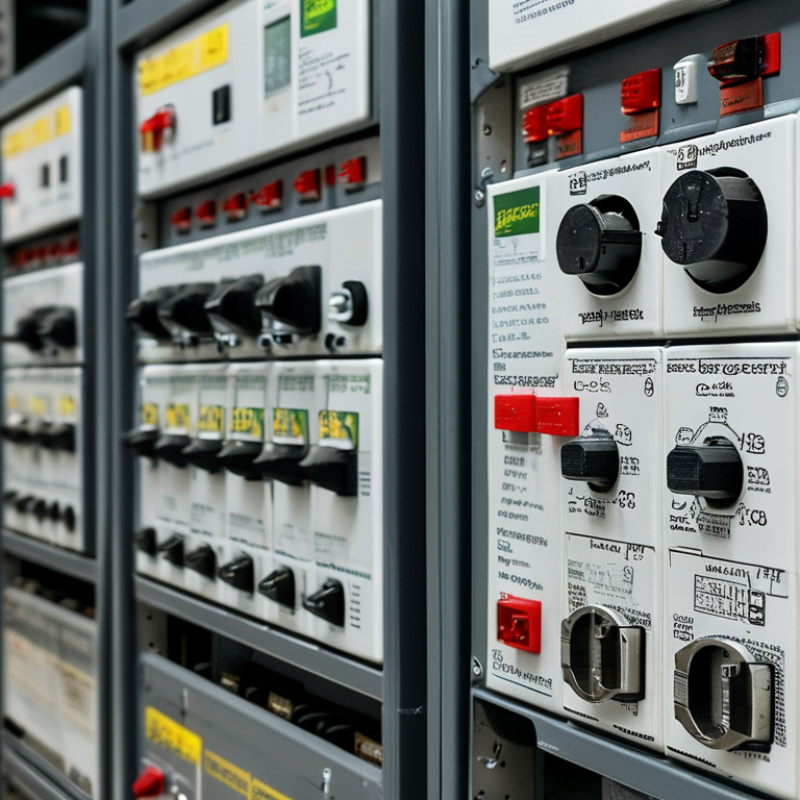
Selecting a power panel starts with the application, not the enclosure. A panelboard may serve lighting and small loads, while a motor control center suits grouped industrial motors. Main distribution panels handle higher feeder capacity. Control panels manage automation signals, drives, and protection devices. Outdoor installations require stronger ingress protection, corrosion resistance, and temperature control.
The International Energy Agency’s Electricity 2024 report projects global electricity demand to grow by about 4% annually through 2026. That growth increases pressure on distribution equipment and future expansion planning. Confirm voltage, phase, continuous current, short-circuit rating, fault level, load diversity, and available space. IEC 61439 requires verification for low-voltage switchgear assemblies, but local approval rules still matter. IP ratings should match dust, water, and cleaning conditions. A common mistake is choosing by present load only. I have seen panels become crowded after one production upgrade.
Tips: Prepare a load schedule with real measurements, not rough estimates. Mark essential and nonessential circuits. Check ambient temperature, altitude, humidity, cable-entry direction, and maintenance clearance. Leave practical spare capacity, but avoid oversized equipment that complicates cost and heat management. Ask the supplier for routine-test records, drawings, protection coordination data, and material certificates. Review those documents with a qualified electrical engineer before purchase. They can reveal assumptions hidden in a neat quotation.
When buying a power panel internationally, verify the electrical environment before comparing price or enclosure size. The International Energy Agency’s Electricity 2024 report projects global electricity demand will rise by about 4% in 2024 and 2025. This growth increases demand for correctly specified distribution equipment. Check nominal voltage, tolerance, frequency, and phase arrangement using the destination utility’s documents. A 400/230 V, 50 Hz three-phase system is not interchangeable with a 480 V, 60 Hz system. Confirm both line-to-line and line-to-neutral values. Small differences matter.
Use IEC 60038 as a reference for standard system voltages, then confirm local requirements with a qualified electrical professional. Frequency affects motors, transformers, timers, and protective devices. Phase errors can cause reverse rotation or uneven loading. Request a wiring diagram, short-circuit rating, ingress protection rating, and destination-market certification evidence. The International Energy Agency’s World Energy Outlook 2024 describes electricity demand and grid investment as entering a major expansion period, while infrastructure quality still varies widely. A familiar-looking panel may remain unsuitable. I once treated a frequency match as sufficient. It was not. Check neutral arrangements, earthing methods, terminals, and cable-entry space. Leave room for local inspection.
| No. | Buying Tip | Key Specification to Verify | Typical Regional Examples | Why It Matters | Recommended Buyer Action |
|---|---|---|---|---|---|
| 1 | Confirm the nominal voltage | Check the panel’s rated system voltage, line-to-line voltage, and line-to-neutral voltage. | Many residential and commercial systems use approximately 120 V or 230 V line-to-neutral service. Three-phase systems commonly use approximately 208 V, 400 V, or 415 V line-to-line, depending on the local network. | A voltage mismatch can cause insulation stress, overheating, nuisance trips, or equipment failure. | Match the panel rating with the utility connection and the nameplate ratings of all connected loads. |
| 2 | Verify the frequency | Confirm whether the installation requires 50 Hz, 60 Hz, or equipment rated for both frequencies. | 50 Hz is widely used across Europe, Africa, Asia, and Australia. 60 Hz is common in North America and parts of South America and East Asia. | Frequency affects motors, transformers, timers, protective relays, and generator synchronization. | Specify the operating frequency on the purchase order and confirm compatibility for motors and inductive loads. |
| 3 | Select the correct phase configuration | Identify single-phase, split-phase, or three-phase supply, together with the required number of poles and neutral arrangement. | Single-phase systems are common for small residential loads. Three-phase systems are widely used for commercial, industrial, and high-power applications. | The wrong phase arrangement may prevent balanced loading, motor operation, or correct protective-device switching. | Provide a single-line diagram showing phases, neutral, protective earth, and incoming supply connections. |
| 4 | Check current capacity and load margin | Review main busbar rating, incomer rating, feeder ratings, continuous-load requirements, and available spare capacity. | Common panel ratings range from small distribution-board capacities to several hundred amperes in commercial and industrial installations; the correct value depends on the calculated load. | Insufficient capacity can create overheating and voltage drop, while excessive capacity may increase cost without improving performance. | Use a documented load schedule and include reasonable allowance for future circuits and starting currents. |
| 5 | Match short-circuit withstand and protection | Verify prospective short-circuit current, short-circuit rating, breaker interrupting capacity, and coordination between protective devices. | The required rating is site-specific and depends on the utility transformer, cable impedance, generator contribution, and installation location. | A panel or breaker with inadequate fault withstand may fail dangerously during a short circuit. | Obtain a fault-current calculation and ensure the panel assembly and protective devices are suitably rated. |
| 6 | Confirm enclosure and environmental requirements | Specify indoor or outdoor use, ingress-protection level, corrosion resistance, ambient temperature, ventilation, and mounting method. | Dry indoor locations may require basic protection, while outdoor, dusty, wet, coastal, or industrial environments need a more suitable enclosure design. | Moisture, dust, salt, heat, and chemicals can reduce insulation life and affect switching reliability. | State the installation environment, required ingress protection, enclosure material, and operating temperature range before quotation. |
| 7 | Check regional standards and approval requirements | Confirm the applicable national wiring rules, product standards, testing documents, labeling, cable-entry practices, and inspection requirements. | Requirements vary by market and may be based on IEC, UL, CSA, or national adaptations. Local authorities determine which rules apply to the installation. | A technically functional panel may still be rejected if its construction, documentation, or markings do not meet local regulations. | Ask a qualified local electrical professional or authority having jurisdiction to review the specification before ordering. |
Note: Regional voltage, frequency, phase, and compliance requirements can vary within a country or utility area. Always verify the actual site supply and applicable local regulations before purchase and installation.
7 Power Panel Buying Tips for Global Buyers
Evaluate Materials, Ratings, Safety Standards, and Certifications
A power panel should match its installation environment, not just its purchase price. Check whether the enclosure uses corrosion-resistant steel, stainless steel, or reinforced insulating material. Coastal sites need stronger protection against salt and humidity. Indoor workshops may need less. That difference matters.
Review voltage, current, frequency, short-circuit capacity, and temperature ratings together. A panel rated for normal operation may perform poorly beside a furnace or generator. Inspect busbars, terminals, cable space, and fastening points. They should look orderly, robust, and easy to service. Small gaps can invite dust or moisture. Poor labeling creates avoidable maintenance risks.
Ask for test reports and certification documents, not only printed marks. Confirm that an accredited laboratory issued them and that the documents match the exact panel configuration. Relevant standards may cover low-voltage assemblies, ingress protection, electrical safety, and electromagnetic compatibility. Requirements vary between countries and project sites. Local inspection rules still deserve careful review.
Do not assume a familiar certificate proves everything. It may cover components, not the complete assembly. A practical factory inspection can reveal loose connections, sharp edges, weak hinges, or unclear wiring. Request photographs, inspection records, and a sample nameplate before shipment. My checklist can still miss installation realities. Leave room for technical review. Safety depends on details.
7 Power Panel Buying Tips for Global Buyers
Capacity should match real demand, not optimistic forecasts. Check present load, motor starting currents, spare circuits, and planned expansion. A panel running near its limit may overheat and shorten component life. Yet oversizing can waste capital and installation space. The right balance requires a qualified electrical review.
Features deserve practical testing. Confirm protection ratings, enclosure strength, cooling, busbar design, monitoring options, and emergency access. Ask whether the panel suits local voltage, frequency, climate, and safety requirements. Documentation matters too. Request wiring diagrams, test records, certificates, and clear installation instructions. Small omissions can create expensive delays.
Supplier quality is more than a low quotation. Examine manufacturing experience, inspection procedures, response times, warranty terms, and replacement-part availability. Compare pricing line by line. Include engineering, packaging, freight, duties, site assembly, commissioning, training, energy losses, and future maintenance. A cheap panel may become costly after arrival. I have seen buyers overlook spare components and local service support. That mistake is easy to repeat. Request a realistic total-cost estimate, then question every unclear assumption. Allow time for independent verification, because even a polished proposal can contain an avoidable error.
When buying a power panel overseas, confirm customization before discussing price. Request drawings, rated voltage, current, enclosure protection, busbar material, and testing requirements. A small mismatch can delay installation or create costly rewiring. The International Energy Agency reported that global electricity demand may grow by about 4% in 2025. Reliable panel specifications therefore matter more as projects expand. Ask for routine test records, wiring diagrams, and sample photographs. Experience shows that clear documents prevent more problems than attractive quotations.
Tip: Send one technical checklist to every supplier.
Logistics deserves equal attention. UNCTAD reports that ships carry over 80% of global merchandise trade. Confirm the shipping term, port, export packaging, insurance responsibility, and delivery schedule in writing. Ask how panels are protected against moisture, vibration, and impact. The World Bank’s 2023 Logistics Performance Index assessed 139 economies and highlighted shipment reliability as a major performance factor. A cheap panel is not economical if its enclosure arrives dented or late. I still see buyers trust estimated delivery dates too easily.
Tip: Require photos before loading and a packing list.
Warranty terms should name the coverage period, exclusions, response time, and replacement process. Ask whether remote troubleshooting, spare parts, and commissioning guidance are included. Keep serial numbers, test reports, and installation records. These details support legitimate claims and improve after-sales communication. Do not assume a long warranty guarantees fast service. That assumption needs questioning. A practical supplier should provide one accountable contact, not several unclear email addresses.
Use this buyer-side priority score to compare suppliers consistently. The score reflects the importance of each verification area when purchasing customized power panels internationally.
Key takeaway: Confirm technical customization, applicable standards, logistics responsibilities, warranty coverage, and after-sales support before placing an international order.