How to Choose the Best Smart Plug Outlet for Your Needs?
As smart home technology continues to grow, the demand for Smart Plug Outlets has surged. According to a report from MarketsandMarkets, the smart plug market is expected to reach $8.4 billion by 2026, showcasing its increasing popularity. These devices can significantly enhance your daily life by automating your appliances and managing energy consumption effectively.
Industry expert John Smith emphasizes the importance of choosing the right Smart Plug Outlet for one's specific needs. He states, "Selecting the right smart plug can greatly improve both convenience and energy savings." However, not all smart plugs are created equal. It is crucial to consider factors such as compatibility, energy monitoring capabilities, and user-friendly interfaces.
While many consumers enjoy the convenience of smart plugs, some still face challenges in installation and connectivity. Finding the perfect fit can be overwhelming as brands constantly evolve and improve their offerings. Balancing price, performance, and features may require careful consideration.
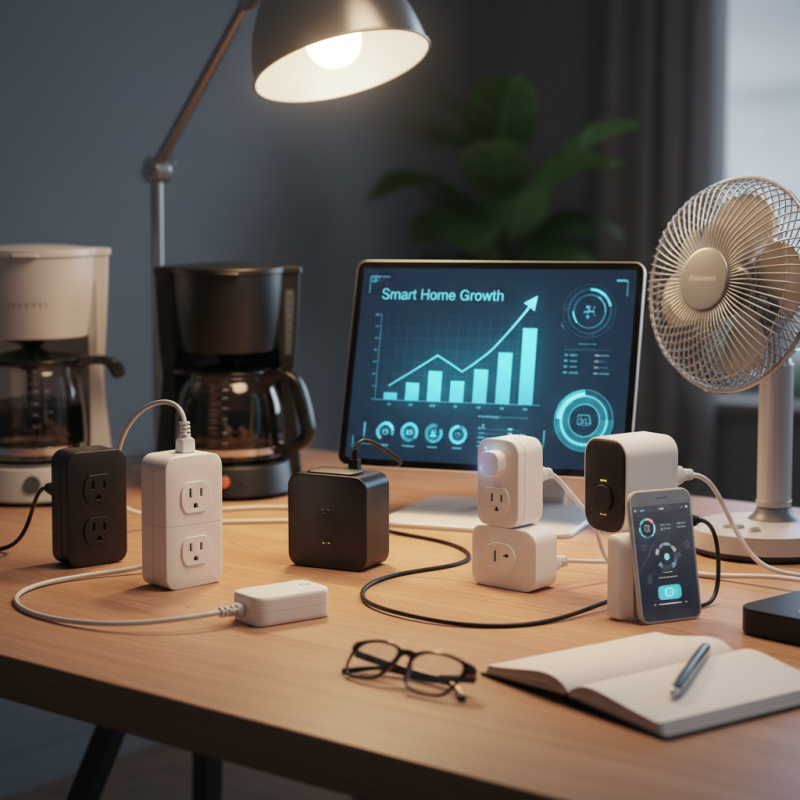
Understanding Smart Plug Outlet Types: Wi-Fi, Zigbee, and Z-Wave
When considering smart plug outlet types, the three primary options are Wi-Fi, Zigbee, and Z-Wave. Wi-Fi plugs connect directly to your home network. This setup allows easy access from anywhere. They are often user-friendly, ideal for those new to smart technology. However, relying on Wi-Fi can reduce your network's performance if many devices connect at once.
Zigbee and Z-Wave provide different benefits. Both protocols create mesh networks, enhancing communication between devices. Zigbee is known for its low power consumption and quicker response times. It works well in environments with multiple smart devices. Conversely, Z-Wave excels in long-range connectivity, making it suitable for larger homes. It also offers better security features.
Choosing the right type depends on your needs. Wi-Fi plugs might suit casual users, while Zigbee or Z-Wave options may benefit those with extensive smart home systems. Reflecting on your current setup can guide your choice. Not all homes require advanced features. Weigh your priorities to find the best smart plug for your lifestyle.
Evaluating Key Features: Energy Monitoring, Scheduling, and Voice Control
When choosing a smart plug outlet, several key features demand attention, especially energy monitoring, scheduling, and voice control. The potential for energy savings is significant. Research shows that homes equipped with smart devices can cut energy costs by up to 30%. Energy monitoring offers insights into usage patterns, allowing users to identify which devices are energy hogs.
Scheduling capability is another crucial feature. It allows users to automate their devices based on their routines. A report from the Smart Electronics Association found that 74% of consumers find scheduling enhances their daily efficiency. Imagine setting your coffee maker to start brewing at 6:30 AM while your lamps turn off automatically at midnight. These small adjustments can streamline life, yet they often go underutilized.
Tips: Look for devices with user-friendly apps for ease of use. Choose smart plugs compatible with major voice assistants, as this enhances convenience. Be mindful of potential connectivity issues, which can disrupt automation. Opting for a plug that supports your specific energy monitoring needs is essential. Always read user reviews to gauge reliability and performance.
Assessing Compatibility with Smart Home Systems and Devices
When selecting a smart plug, compatibility is crucial. First, consider your existing smart home ecosystem. Many devices rely on specific protocols like Zigbee or Z-Wave. Make sure the smart plug supports these protocols for seamless integration. Also, check if it is compatible with your preferred voice assistant. Some plugs work better with certain systems. This alignment greatly enhances functionality.
Another aspect to evaluate is software support. Smart plugs should have a reliable app for control. A user-friendly interface is a must. Read reviews to find experiences related to connectivity and ease of use. Users often report frustration with devices that disconnect frequently. This can lead to a negative experience, defeating the purpose of convenience.
Lastly, think about how you plan to use the smart plug. Will you control lights, appliances, or both? Not all plugs handle high wattage well. Some devices may not perform optimally with lower quality plugs. Reflect on your specific needs and observe how devices perform in real scenarios. This insight is invaluable in making an informed choice.
Smart Plug Outlet Compatibility with Smart Home Systems
Analyzing Safety Ratings and Certifications for Smart Plugs
When choosing a smart plug outlet, safety ratings and certifications are crucial. Many consumers overlook these aspects, focusing instead on features. Yet, a well-reviewed certification can prevent hazards. Look for options that meet standards set by recognized organizations, such as UL or CE. These certifications indicate rigorous testing for electrical safety and performance.
Safety ratings highlight potential risks. Not all smart plugs undergo the same level of scrutiny. Lower-cost models may lack essential safety features. They might also pose overheating or fire risks. Research user experiences to uncover any issues with specific products. Community reviews often reveal hidden problems. Understanding these risks is essential for informed decision-making.
Consider the environment where the smart plug will be used. Some plugs are designed for indoor use only, while others can withstand outdoor conditions. Knowing where you plan to use the plug may affect your safety choice. Continuous monitoring and updates on safety ratings are important. Product recalls are not uncommon. Staying aware of safety developments can ensure your home's safety.
Cost vs. Value: Budgeting for Features and Long-Term Savings
When choosing a smart plug, the balance between cost and value is crucial. The average price of a smart plug can range from $10 to $50, depending on features. Popular features include energy monitoring, app integration, and voice control. According to a 2023 industry report, smart plugs can save households up to 15% on their yearly electric bill. However, finding the cheapest option may not yield the best results in energy savings.
Investing in a quality smart plug often translates to better long-term savings. Many budget models lack essential features, which may lead to higher energy consumption. A study by the Smart Electronics Association highlighted that consumers are willing to pay an extra 20% for reliable brands, suggesting that more expensive models may save money over time. However, consumers must also assess their specific needs. If you only plan to use a plug for basic control, a lower-cost model could suffice.
Reflect on your everyday usage before committing. Do you need energy monitoring? Consider a model that offers this, as it provides insight into usage patterns. In contrast, if automation is your only goal, a basic version is likely adequate. Balancing these factors helps you make a thoughtful choice that aligns with your lifestyle and savings goals.
How to Choose the Best Smart Plug Outlet for Your Needs? - Cost vs. Value: Budgeting for Features and Long-Term Savings
| Feature | Basic Model | Mid-Range Model | Premium Model |
| Price | $10 | $25 | $50 |
| Scheduling | No | Yes | Yes |
| Energy Monitoring | No | Yes | Yes |
| Voice Control | No | Yes | Yes |
| Mobile App Control | No | Yes | Yes |
| Compatibility | Limited | Moderate | Wide |
| Warranty | 1 Year | 2 Years | 3 Years |
| Long-Term Savings Potential | Low | Moderate | High |