Choosing the right Embedded Pc manufacturer in China requires more than comparing prices and processor brands. Global buyers need dependable hardware, clear documentation, stable communication, and practical engineering support. A compact fanless computer may look impressive in a product image, yet its performance can change under continuous heat, vibration, or dust. Real evaluation begins with the details.
This guide examines China’s leading Embedded Pc manufacturers through a buyer-focused lens. It considers industrial experience, product customization, quality management, testing procedures, and long-term availability. Important factors include processor options, RAM and storage choices, operating temperature, I/O ports, mounting systems, BIOS control, and enclosure design. Buyers should also review sample performance before approving volume orders. A factory audit can reveal more than a polished website.
No supplier is perfect.
Some manufacturers publish incomplete thermal data. Others offer fast prototypes but slower after-sales support. These weaknesses deserve honest attention. Reliable suppliers should provide traceable test records, accurate datasheets, suitable compliance documentation, and realistic production schedules. Certifications may vary by model and destination, so buyers must verify current documents independently. Communication matters as well. A responsive engineering team can resolve a port change or firmware issue before it becomes an expensive delay. This overview helps distributors, system integrators, and industrial users compare Chinese manufacturers with greater confidence. It also encourages careful questions, because the lowest quotation is rarely the full cost of ownership.
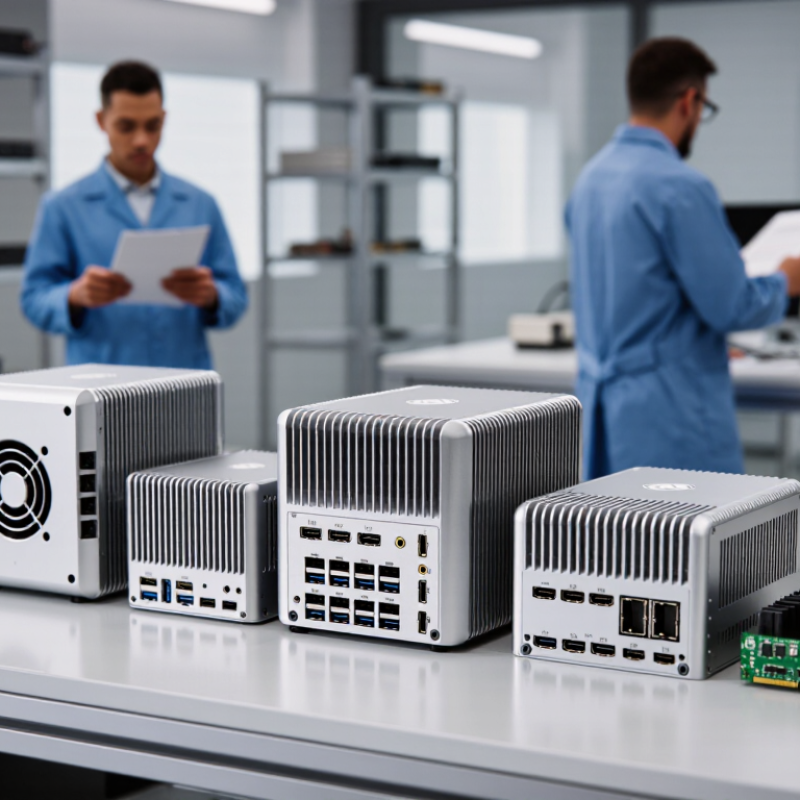
An embedded PC is a compact computer designed for a specific machine or long-term application. Unlike a standard desktop, it often operates inside kiosks, factory equipment, transport systems, or medical devices. Its value comes from stable performance, compact construction, and dependable operation under demanding conditions.
Manufacturer selection matters because the computer becomes part of a larger system. A qualified manufacturer should explain processor choices, memory limits, storage endurance, operating temperature, and power protection clearly. Factory inspection also matters. Engineers should verify thermal tests, vibration resistance, connector quality, and firmware control before approving a design. Small details matter.
China has a broad embedded-computing supply chain, but product quality can vary considerably. A low quotation may hide weak documentation, inconsistent components, or limited after-sales support. It is not always a saving. Global buyers should request sample testing, production records, compliance documents, and a realistic delivery schedule. Long-term support deserves equal attention. Can the manufacturer provide replacement parts five years later? Can its engineers solve a BIOS or driver issue quickly? These questions expose practical reliability better than attractive specifications. A careful buyer may also discover that the first chosen configuration is excessive, while another lacks expansion capacity. That is a useful imperfection to identify early, before installation costs increase.
| Evaluation Dimension | Typical Embedded PC Data | Why It Matters to Global Buyers | What to Confirm with the Manufacturer |
|---|---|---|---|
| Definition | A compact computer designed for dedicated, continuous operation inside industrial, commercial, transportation, or automation equipment. | The system is selected for a specific embedded application rather than general desktop use. | Application purpose, installation location, duty cycle, required operating life, and software platform. |
| Processor Architecture | Common options include x86 processors for broad software compatibility and ARM-based processors for lower power consumption in selected designs. | Architecture affects operating-system compatibility, application support, performance, power use, and long-term availability. | Processor lifecycle, performance benchmarks, operating-system support, BIOS or firmware availability, and replacement planning. |
| Memory and Storage | Typical configurations use soldered or socketed memory and solid-state storage such as SATA SSDs, M.2 modules, or eMMC, depending on platform design. | Memory capacity and storage endurance influence application responsiveness, reliability, and maintenance intervals. | Maximum memory, storage interface, write-endurance rating, data-retention requirements, secure-erase options, and replacement procedure. |
| Industrial Interfaces | Frequently available interfaces include Ethernet, USB, serial ports, digital I/O, CAN, HDMI or DisplayPort, and expansion slots. | The correct interface combination reduces the need for external converters and simplifies system integration. | Port quantity, connector type, isolation, voltage levels, communication protocols, pinout documentation, and expansion-card compatibility. |
| Operating Temperature | Commercial designs are commonly specified around 0 °C to 40 °C, while industrial designs may support wider ranges such as -20 °C to 60 °C or broader, depending on configuration. | Temperature capability affects deployment in factory floors, outdoor cabinets, vehicles, and other demanding environments. | Test conditions, airflow requirements, thermal throttling behavior, storage temperature, humidity limits, and installed-component derating. |
| Mechanical Design | Fanless aluminum enclosures, DIN-rail mounting, wall mounting, VESA mounting, and compact panel-mount formats are commonly used. | A suitable enclosure improves thermal management, installation efficiency, vibration resistance, and service access. | Dimensions, mounting drawings, ingress protection, vibration and shock test methods, enclosure material, and cable clearance. |
| Power Input | Many embedded systems accept low-voltage DC input, often with protection against overvoltage, reverse polarity, and electrical transients. | Stable power compatibility is essential for industrial control panels, vehicles, remote equipment, and battery-powered systems. | Input-voltage range, power consumption, peak current, connector polarity, surge protection, grounding, and power-adapter compliance. |
| Reliability and Lifecycle | Industrial products are typically designed for long operating cycles and may use components selected for extended availability and continuous operation. | Stable supply reduces redesign risk, qualification cost, and downtime over the equipment lifecycle. | Mean time between failures methodology, component lifecycle policy, revision control, repair process, spare-parts plan, and end-of-life notice period. |
| Compliance and Market Access | Depending on the destination and application, relevant requirements may include CE, FCC, UKCA, RoHS, REACH, UL-related safety requirements, or automotive and industrial standards. | Correct documentation supports customs clearance, customer approval, legal deployment, and electromagnetic-compatibility assessment. | Test reports, declarations of conformity, material declarations, country-specific markings, and certification scope for the exact configuration. |
| Customization Capability | Possible customization areas include I/O layout, enclosure, BIOS settings, branding, operating-system image, mounting hardware, and firmware features. | Customization can improve integration but may increase validation time, minimum order quantities, and future maintenance requirements. | Engineering support, prototype process, non-recurring engineering fees, minimum order quantity, tooling ownership, and change-control procedure. |
| Technical Support | Support may include manuals, drawings, drivers, firmware updates, remote troubleshooting, repair services, and integration assistance. | Responsive technical support helps shorten installation time and resolve failures across different time zones. | Support language, response-time target, remote-service process, warranty terms, return procedure, documentation quality, and regional service coverage. |
| Total Cost of Ownership | Total cost includes hardware price, engineering, accessories, software licensing, shipping, import duties, maintenance, energy use, and replacement parts. | The lowest purchase price may not provide the lowest lifecycle cost if reliability, support, or compatibility is inadequate. | Incoterms, lead time, payment terms, warranty coverage, spare-unit pricing, energy consumption, and expected service life. |