2026 Top Button Cell Battery Types for Global Buyers?
Choosing the right Button Cell Battery in 2026 requires more than comparing voltage and price. Global buyers must examine chemistry, capacity, shelf life, temperature performance, packaging, and supplier consistency. A small battery may power a medical monitor, car key, watch, sensor, or backup memory circuit. Each application creates different risks and expectations.
This guide reviews common types, including alkaline, silver oxide, lithium, zinc-air, and rechargeable button cells. Lithium cells often support compact electronics with high energy density and long storage life. Silver oxide cells can provide stable voltage for precision devices. Zinc-air batteries suit hearing aids, but their performance depends on air exposure and storage conditions. Rechargeable options may reduce replacement frequency, although charging requirements and cycle limits deserve careful attention.
Our comparison reflects practical sourcing concerns, not only laboratory specifications. Buyers should verify datasheets, batch traceability, safety documentation, recycling guidance, and applicable transport requirements. Supplier audits and sample testing can reveal problems hidden by attractive quotations. A low unit price means little if leakage damages equipment or capacity varies between batches.
Details matter most.
There is no universal best chemistry. Humidity, shipping time, device load, and regional standards can change the final decision. Some product descriptions also overstate performance, and buyers should question unsupported claims. By comparing technical evidence with real operating conditions, procurement teams can make safer and more reliable choices for global markets in 2026.
Button Cell Batteries: Definition, Structure, and Core Functions
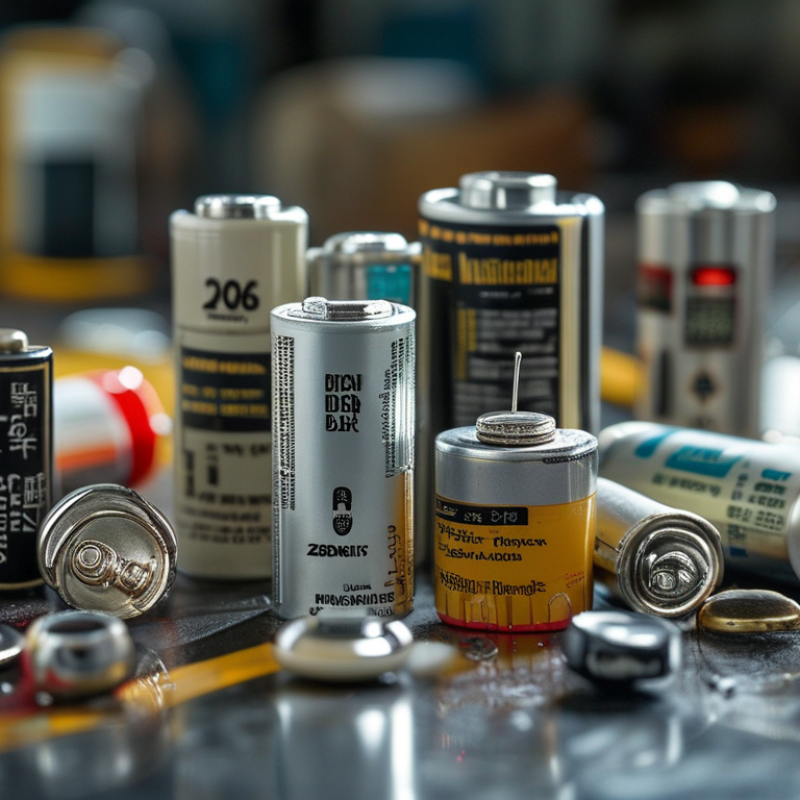
Button cell batteries are small electrochemical power sources with a flat, round shape. The term describes their form, not one specific chemistry. Common types include alkaline, silver oxide, lithium, zinc-air, and rechargeable nickel-metal hydride cells. Each chemistry offers different voltage, shelf life, discharge behavior, and temperature performance.
Their structure is simple but carefully engineered. A typical cell contains an anode, cathode, separator, electrolyte, metal casing, and sealing gasket. The anode releases electrons during discharge, while the cathode accepts them through the external circuit. The separator prevents direct contact between electrodes while allowing ions to move internally. The casing provides mechanical protection and electrical connection. The gasket reduces leakage risk. Small details matter.
The core function is controlled energy delivery. A button cell may power a watch, sensor, calculator, medical instrument, or compact measuring device. Capacity is usually measured in milliampere-hours, but actual performance depends on current, temperature, and cutoff voltage. High-pulse devices can behave differently from low-drain devices. I have seen buyers rely on nominal voltage alone, which is a weak comparison. A neat datasheet can still hide important test conditions. Check dimensions, polarity, chemistry, operating temperature, shelf life, internal resistance, and discharge curves. Two cells may fit the same compartment but perform very differently. Cost is not the whole answer.
Main Button Cell Battery Types Available to Global Buyers in 2026
Main Button Cell Battery Types Available to Global Buyers in 2026
Global buyers can select several button cell chemistries, each serving a different device need. Alkaline cells, marked LR, suit clocks, toys, and basic remote controls. Silver-oxide cells, marked SR, provide steadier voltage for watches, medical instruments, and precision meters. Lithium coin cells, marked CR, support cameras, sensors, computers, and vehicle accessories. Their high energy density helps devices remain compact.
Zinc-air cells, commonly marked PR, are designed mainly for hearing equipment. They activate after removing the sealing tab and need air exposure. Rechargeable lithium button cells, including LIR types, support repeated use in selected electronics. However, their voltage, charging method, and protection requirements differ from primary lithium cells. Mixing them can damage equipment. IEC 60086 classifications help buyers compare chemistry, size, and performance more consistently.
Market estimates vary. Grand View Research reported continued growth in the global button cell market, supported by wearable electronics, medical devices, and smart sensors. Mordor Intelligence also identifies consumer electronics and healthcare as major demand areas through this decade. These reports differ in market boundaries and forecasts, so buyers should avoid treating one figure as absolute. A practical check includes diameter, height, nominal voltage, operating temperature, shelf life, and transport documentation. The cheapest cell may fail early. That is an uncomfortable but common purchasing lesson.
Key Differences in Chemistry, Voltage, Capacity, and Size
2026 Top Button Cell Battery Types for Global Buyers
Button cells differ sharply in chemistry, voltage, capacity, and physical size. Alkaline cells usually provide about 1.5 volts at an economical price. Silver-oxide cells offer steadier voltage, often near 1.55 volts, for precision instruments. Lithium primary cells commonly deliver 3.0 volts and perform well in compact devices. Zinc-air cells can provide high energy density, but they require air exposure after activation. Chemistry matters greatly.
Voltage is only one selection factor. Capacity changes with discharge current, temperature, storage age, and the device’s cutoff voltage. A cell rated at 200 mAh may deliver less under a heavy pulse load. Small devices may need stable output rather than maximum capacity. Check the full discharge curve. Not just the label.
Size codes describe diameter and thickness, but similar dimensions do not guarantee compatibility. A 20-millimeter cell with the wrong voltage can damage sensitive electronics. Contact design also affects resistance and reliability. Global buyers should compare datasheets, safety documentation, production samples, and independent test results. I would test low-temperature performance before approving a large order. Laboratory figures sometimes look better than field results. That gap deserves attention. Exact capacity can also vary between production batches, so quality control records remain essential.
2026 Top Button Cell Battery Types for Global Buyers? - Key Differences in Chemistry, Voltage, Capacity, and Size
| Battery type | IEC designation | Chemistry | Nominal voltage | Typical capacity range* | Common sizes | Rechargeable | Typical applications | Key purchasing considerations |
| Alkaline | LR | Zinc–manganese dioxide, alkaline electrolyte | 1.5 V | About 25–200 mAh | LR44, LR41, LR43, LR54 | No | Low-drain clocks, calculators, toys, thermometers | Generally economical; capacity decreases significantly under higher continuous loads. |
| Silver oxide | SR | Silver oxide–zinc | 1.55 V | About 20–200 mAh | SR44, SR41, SR43, SR54 | No | Watches, precision instruments, medical and measuring devices | Stable voltage and better high-drain performance than alkaline; higher material cost. |
| Lithium primary | CR, BR | Lithium–manganese dioxide (CR) or lithium–carbon monofluoride (BR) | 3.0 V | About 25–2,500 mAh | CR1025, CR1216, CR2032, CR2450, BR2032 | No | Remote controls, sensors, memory backup, medical devices, meters | High energy density and long shelf life; do not recharge and require lithium-battery transport compliance. |
| Zinc air | PR | Zinc–oxygen, air-activated cathode | 1.4 V | About 70–675 mAh | PR44, PR41, PR48, PR70 | No | Hearing aids and other compact, low-current medical electronics | Remove the sealing tab only before use; performance depends on air access, humidity, and activation time. |
| Lithium-ion rechargeable | LIR | Lithium-ion, commonly lithium cobalt oxide or related cathode systems | 3.6–3.7 V | About 15–150 mAh | LIR2032, LIR2450, LIR2025 | Yes | Rechargeable electronics, compact sensors, backup power modules | Requires a compatible charge-control system; terminal voltage is not interchangeable with CR cells. |
| Rechargeable lithium manganese | ML | Lithium–manganese dioxide rechargeable system | 3.0 V | About 20–70 mAh | ML2020, ML2032 | Yes | Memory backup, real-time clocks, low-current embedded electronics | Designed for low-rate or continuous charging; use only within the specified charging limits. |
| Nickel-metal hydride rechargeable | Standard prefix varies by construction | Nickel oxyhydroxide–metal hydride | 1.2 V | About 20–80 mAh | Button formats around 10–24 mm diameter | Yes | Specialized rechargeable devices, small electronics, memory backup | Lower voltage than lithium cells; charging method and protection requirements differ by design. |
| Mercury oxide | MR | Mercury oxide–zinc | 1.35 V | Historically about 30–1,000 mAh | Various legacy button and cylindrical formats | No | Legacy instruments and discontinued equipment | Not suitable for normal new-product procurement because mercury-cell production and sale are restricted in many markets. |
*Capacity values are indicative ranges for commonly manufactured button-cell sizes. Actual capacity depends on cell dimensions, discharge current, cutoff voltage, temperature, storage period, and manufacturer specifications. IEC designations identify the electrochemical system and approximate form factor; always verify the exact diameter, height, terminal configuration, operating temperature, and applicable transport and recycling requirements before purchase.
How to Select the Right Button Cell for Each Application
2026 Top Button Cell Battery Types for Global Buyers
How to Select the Right Button Cell for Each Application
Selecting a button cell starts with the device, not the battery catalog. Measure the compartment carefully, including diameter, height, and contact pressure. A cell that fits loosely may interrupt power during vibration.
Silver oxide cells suit watches, meters, and compact instruments needing stable voltage. Alkaline cells can support lower-cost devices with moderate energy demands. Lithium cells provide high energy density for sensors, memory backup, and remote controls. Zinc-air cells offer strong capacity for specific low-drain applications, but they require air exposure and careful storage.
Check the device’s continuous current and pulse current separately. A wireless sensor may sleep for hours, then demand a sharp transmission pulse. A battery with high capacity can still fail under that load. Read discharge curves at the expected temperature, not only the headline capacity. Cold storage rooms and outdoor equipment often reveal weaknesses.
Test real samples.
Verify polarity, leakage resistance, shelf life, and activation requirements. For global purchasing, request consistent dimensional tolerances, traceable production records, and recognized safety documentation. Compare results under the same test method. Otherwise, the numbers can mislead.
One detail is easy to miss: protective coatings and contact materials can affect conductivity. I once underestimated this during a prototype review. The cell was suitable on paper, yet contact resistance reduced operating time. Retesting the complete assembly is wiser than trusting a datasheet alone. Consider storage conditions, replacement access, and disposal procedures before approving the final cell type.
Safety, Standards, Storage, and International Purchasing Factors
2026 Top Button Cell Battery Types for Global Buyers?
Safety, Standards, Storage, and International Purchasing Factors
Global buyers commonly compare lithium coin cells, silver-oxide cells, alkaline cells, and zinc-air cells. Lithium cells provide high energy density for meters, sensors, and compact electronics. Silver-oxide cells offer stable voltage in watches and precision instruments. Alkaline cells usually suit lower-cost, lower-drain devices. Zinc-air cells deliver strong capacity, but their performance depends on air exposure and sealing quality.
Safety begins with correct matching. Buyers should verify voltage, dimensions, discharge requirements, and equipment polarity. A small cell can still create heat if short-circuited. Keep loose cells away from metal objects, children, and damaged packaging. Lithium cells may require transport documentation, safety data sheets, and UN 38.3 test evidence. Requirements can differ by destination, carrier, and shipment size.
Check recognized standards, batch traceability, production dates, and independent test reports. IEC 60086 references are useful for many primary battery formats, but they do not replace market-specific compliance checks. Storage should be cool, dry, and protected from direct sunlight. Avoid mixing old and new cells. Do not freeze them. High humidity can damage packaging and terminals.
International purchasing also involves carton labeling, customs descriptions, minimum order quantities, and predictable replenishment. Ask suppliers how they control leakage, sealing, and lot variation. A neat specification sheet can still hide weak quality controls. That mistake is easy to make. Request samples from multiple lots, then test them under the device’s actual load. Temperature cycling and shelf-life checks may reveal problems that a simple voltage reading misses.
2026 Top Button Cell Battery Types for Global Buyers
Safety, standards, storage, and international purchasing factors based on common button-cell chemistries.
How to read the chart: Nominal voltage differs by chemistry. Lithium-manganese dioxide cells generally provide 3.0 V, silver-oxide cells about 1.55 V, alkaline cells about 1.5 V, zinc-air cells about 1.4 V after activation, and rechargeable lithium-ion button cells about 3.6 V.
Safety and standards: Confirm the applicable IEC 60086 requirements, including IEC 60086-3 for watch batteries, IEC 60086-4 for lithium batteries, and IEC 60086-5 for batteries with aqueous electrolyte. Primary button cells should not be recharged. Prevent short circuits, swallowing incidents, overheating, crushing, and contact with metal objects. Lithium cells may also require UN 38.3 transport documentation.
Storage and international purchasing: Store cells in their original packaging in a cool, dry environment away from heat and moisture. Check chemistry, dimensions, polarity, terminal design, shelf-life date, lot traceability, safety data, transport classification, and destination-market compliance before placing an international order. Zinc-air cells should remain sealed until use.