2026 Best Soil Fertilizer Tester for Global Buyers

Blog

2026 Best Soil Fertilizer Tester for Global Buyers

Choosing the 2026 Best Soil Fertilizer Tester requires more than comparing prices, screen sizes, or marketing claims. Global buyers need reliable readings in real fields, greenhouses, nurseries, and agricultural laboratories. A useful Soil Fertilizer Tester should measure key conditions such as soil pH, electrical conductivity, moisture, temperature, and available nutrients. It should also provide clear instructions for different soil textures and crop systems.

Dr. Rattan Lal, a globally respected soil scientist, has repeatedly emphasized that “soil is the foundation of life.” His message matters when selecting testing equipment. A device may show a precise number, yet that number can mislead without proper sampling, calibration, and interpretation. One dry sample from the field edge is not enough. Collecting soil from several spots often gives a more realistic picture.

Small details matter.

Buyers should examine sensor quality, measurement range, battery performance, data storage, and after-sales support. Exporters also need to consider language options, packaging strength, local power requirements, and technical documentation. A low-cost tester may suit basic screening, but it may not support professional fertilizer planning. Even advanced instruments have limits. Soil salinity, uneven moisture, and poor calibration can distort results.

This guide compares practical features for international purchasing decisions. It focuses on usability, measurement consistency, maintenance, and value over time. No tester replaces agronomic judgment. That is an uncomfortable truth. Still, the right Soil Fertilizer Tester can help buyers reduce guesswork, prevent unnecessary fertilizer use, and make more responsible soil-management decisions.
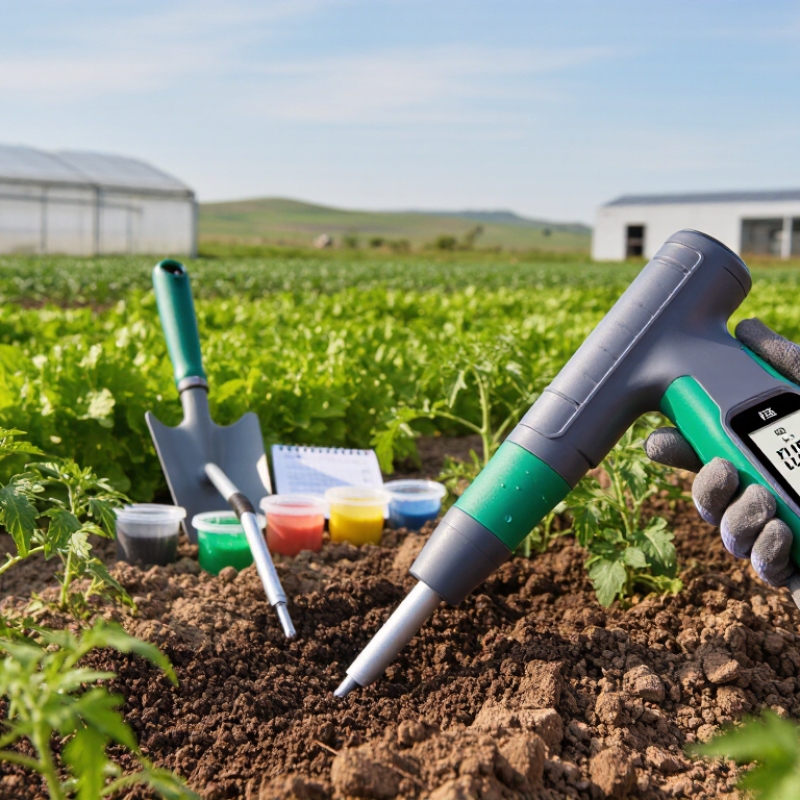
2026 Best Soil Fertilizer Tester for Global Buyers

What a Soil Fertilizer Tester Measures

A soil fertilizer tester measures more than fertilizer strength. It commonly checks pH, electrical conductivity, moisture, temperature, and available nutrients such as nitrogen, phosphorus, and potassium. These readings show whether roots face acidity, salt stress, drought, or nutrient shortages. The USDA Natural Resources Conservation Service notes that many crops perform best near pH 6.0–7.0, although crop needs differ. A small pH shift can change nutrient availability.

Electrical conductivity indicates dissolved salts, not fertility alone. A high reading after repeated fertilizing may signal salt buildup around roots. Moisture sensors add useful context, especially when a dry sample produces misleadingly concentrated readings. Some meters estimate nitrate, phosphate, and potassium through probes or test strips. Their accuracy depends on calibration, soil texture, temperature, and sampling depth.

Take samples from several spots, remove stones, mix them, and test at root depth. Test twice. Compare results with laboratory analysis when applying fertilizer at scale. The FAO Status of the World’s Soil Resources report identifies nutrient imbalance as a major global soil threat. Yet a handheld tester cannot replace professional interpretation. I have seen readings change after poor probe contact or uneven soil mixing. That weakness matters. Clean the sensor, follow the stated calibration routine, and record readings beside crop growth, leaf color, and recent rainfall. A number is evidence, not a complete diagnosis.

2026 Best Soil Fertilizer Tester for Global Buyers: What a Soil Fertilizer Tester Measures

A soil fertilizer tester commonly measures pH, electrical conductivity (EC), nitrate-nitrogen, available phosphorus, and exchangeable potassium. The chart shows where typical vegetable-soil target ranges sit within practical test scales; actual recommendations vary by crop, soil type, and laboratory method.

Reference ranges: pH 6.0–7.0; EC 1.0–2.5 dS/m; nitrate-nitrogen 20–50 mg/kg; available phosphorus 15–40 mg/kg; exchangeable potassium 120–250 mg/kg. These are general production references, not universal fertilizer prescriptions.

Key Features for Comparing Fertilizer Testers

2026 Best Soil Fertilizer Tester for Global Buyers

Key Features for Comparing Fertilizer Testers

Global buyers should compare measurement quality before screen size or accessory count. The International Fertilizer Association estimated global fertilizer consumption at about 190 million tonnes of nutrients in 2023. This scale makes reliable field testing increasingly important. A practical tester should measure pH, electrical conductivity, moisture, and available nutrients. Nitrogen, phosphorus, and potassium readings are useful, but they can mislead without proper soil sampling. The FAO’s Global Status of Soil Resources report warns that nutrient imbalance remains a major soil-management concern.

Look for automatic temperature compensation and clear measurement units. Calibration should support standard solutions, with records showing when calibration occurred. Replaceable probes are valuable for frequent testing. A durable enclosure helps in wet fields, but an IP rating alone does not prove long-term reliability. Check repeatability, operating temperature, battery life, and data export options. ISO 11265 describes laboratory soil electrical-conductivity testing, so buyers should ask whether a handheld tester explains its comparison method.

Field experience reveals an inconvenient weakness: many low-cost meters produce confident numbers from poorly mixed samples. Test at several points, remove stones, and avoid recently fertilized spots when checking baseline soil. Three readings are better than one. Still, handheld devices cannot fully replace accredited laboratory analysis, especially for nutrient recommendations. Some results may drift after months of use. That limitation deserves attention. A credible supplier should provide calibration guidance, technical documents, warranty terms, and independent performance evidence rather than promising perfect accuracy.

How to Choose a Tester for Different Soil Types

Choosing the Best Soil Fertilizer Tester for Different Soil Types

A reliable soil fertilizer tester should match the soil, not merely display a number. Sandy soil drains quickly, so nitrate readings can change after rainfall or irrigation. Clay soil holds nutrients longer, but uneven samples may produce misleading results. Loam is easier to test, though compost pockets can still distort the reading.

Take several samples from the root zone, usually 10 to 20 centimeters deep. Remove stones, roots, and surface debris before mixing the samples in a clean container. For vegetable beds, test separate areas with different crops or fertilizer histories. A tester with adjustable nutrient ranges is useful for gardens, fields, and greenhouse containers. Moisture measurement also matters, especially in dry sandy beds.

Readings should guide decisions, not replace field observation. Yellow leaves, weak roots, and slow growth may indicate nutrient stress, but they can also signal poor drainage or disease. I have found that testing the same area twice gives more confidence than trusting one quick result. Still, handheld testers are not laboratory instruments. Their accuracy can decline when sensors remain dirty or poorly calibrated. Rinse the probe, follow the stated calibration process, and record results with the date, crop, and recent fertilizer use. Small records often reveal patterns that a single reading misses.

Testing Accuracy, Ease of Use, and Maintenance

2026 Best Soil Fertilizer Tester for Global Buyers

Testing Accuracy, Ease of Use, and Maintenance

Choosing a soil fertilizer tester in 2026 means looking beyond a bright screen and a low purchase price. Accuracy starts with sampling. Take soil from several spots, remove stones, mix it, and test a representative portion. Testing one dry surface patch can produce a confident but misleading reading. Reliable instruments should explain measurement ranges, expected tolerances, and calibration steps in clear language. Before field use, compare readings with a prepared reference solution or a laboratory result, when suitable. No device remains accurate forever. Temperature, residue, battery condition, and aging sensors can shift results. Record the date, soil condition, and reading each time. This simple log exposes unusual changes before they affect fertilizer decisions.

Ease of use matters when hands are muddy and time is limited. Look for a readable display, a stable probe, and controls that do not require guesswork. A short response time helps, but speed should not replace repeat testing. Run two or three tests from the same mixed sample. Similar results build confidence; large differences demand investigation. Maintenance should be practical. Rinse the probe with clean water, dry it gently, and follow the stated storage method. Do not scrape sensing surfaces or leave them buried in wet soil. Replaceable parts and accessible instructions can matter more than extra functions. One weakness deserves attention: many buyers trust digital numbers too quickly. Even a well-built tester cannot correct poor sampling or unsuitable calibration. Treat its reading as evidence, not an unquestionable instruction.

Best Soil Fertilizer Tester Options for Global Buyers

For global buyers, the best soil fertilizer tester depends on the crop, soil type, and testing environment. A basic handheld meter can check pH, moisture, and electrical conductivity in minutes. These readings help identify acidity, dryness, and possible salt buildup. More advanced options may estimate nitrogen, phosphorus, and potassium, but field results can vary. Laboratory confirmation remains important for high-value crops.

Field reality matters. A reliable tester should offer stable probes, clear units, replaceable parts, and simple calibration steps. Before purchase, check whether the device supports local measurement preferences, such as pH ranges, EC units, and language settings. Buyers should also review battery life, waterproof protection, operating temperature, and data storage. A bright screen is useful under strong sunlight. It sounds minor, but it saves time.

Numbers can drift. Soil residue, poor sampling depth, and recent fertilizer application may distort readings. Test several points across one field instead of trusting a single sample. Choose equipment with calibration solutions, technical documentation, and responsive service support. Independent laboratory comparisons or published test procedures add credibility. A low-cost meter may suit occasional garden checks, while farms and distributors often need repeatable readings and replacement sensors. I would not select a multi-function tester only because it lists more nutrients; practical accuracy matters more than a crowded feature list.

2026 Best Soil Fertilizer Tester for Global Buyers - Best Soil Fertilizer Tester Options for Global Buyers

Tester Option Best For Measurement Method Parameters Typical Measuring Range Typical Accuracy Sample Preparation Recommended Buying Priority
Single-Parameter pH Tester Routine soil acidity checks for gardens, nurseries, and field crops Glass or solid-state electrode after calibration Soil pH pH 0.00–14.00; most soils commonly fall between pH 4 and 9 Approximately ±0.05 to ±0.10 pH Usually requires a soil-water or calcium chloride slurry; direct-probe models vary Calibration stability, replaceable electrode, temperature compensation
3-in-1 Soil Meter Home gardening and quick screening where laboratory precision is not required Electrical or analog sensing probes Moisture, pH, light Moisture: relative scale; pH: commonly 3–8; light: relative scale Screening-level results; performance varies significantly by soil type Generally no slurry for basic readings; clean and insert probe consistently Simple operation, repeatability, probe corrosion resistance
Digital NPK Soil Tester Comparative nutrient screening for fertilizer planning Ion-selective, electrochemical, or extraction-based measurement depending on model Nitrogen, phosphorus, potassium; some models also measure pH and moisture Typically displayed as low, medium, high, or approximate mg/kg bands Model-dependent; field screening is generally less precise than laboratory extraction Often requires a soil-water extract or reagent solution for more reliable results Defined calibration procedure, nutrient-specific validation, consumable availability
Portable EC and Salinity Meter Greenhouses, irrigation management, and salt-affected soils Electrical conductivity measurement with temperature compensation Electrical conductivity, salinity, temperature Commonly 0–20 mS/cm; higher-range models are available Approximately ±1% to ±2% of full scale for many professional handheld units Usually uses a soil-water extract or measured drainage solution Cell constant accuracy, automatic temperature compensation, calibration standards
Soil Moisture Probe Irrigation scheduling and water-use monitoring Capacitance, frequency-domain, or resistance-based sensing Volumetric water content or relative soil moisture Relative dry-to-wet scale or approximately 0–100% VWC, depending on calibration Often approximately ±2% to ±5% VWC after soil-specific calibration Requires firm soil contact; calibration is affected by texture, density, and salinity Probe length, installation method, data logging, and soil-specific calibration
Professional Multi-Parameter Field Meter Commercial farms, agronomy services, and repeatable field surveys Interchangeable electrodes and validated extraction or sensor methods pH, EC, temperature, moisture; optional nutrient or oxidation-reduction readings pH 0–14; EC commonly 0–20 mS/cm; temperature typically −5–60°C Typically better repeatability than consumer meters when correctly calibrated Often requires standardized extraction, filtering, and cleaning procedures Data export, rugged housing, serviceability, calibration records, replacement probes
Laboratory Soil Test Kit Buyers requiring documented nutrient results for agronomic decisions Chemical extraction followed by colorimetric comparison or photometric reading Usually pH, nitrate or nitrogen, available phosphorus, and potassium Depends on the extraction method and reagent scale; commonly reported in mg/kg or rating bands Method-dependent and generally more defensible than uncalibrated direct-probe readings Requires representative sampling, mixing, extraction, reagents, and timed reactions Method documentation, reagent shelf life, reference charts, and quality control
Buyer note: Soil pH, electrical conductivity, and moisture can be measured directly or with relatively simple field procedures. Nitrogen, phosphorus, and potassium results depend strongly on the extraction method, soil texture, calibration, and sampling quality; laboratory testing remains the reference for fertilizer-rate decisions.