WORLD electronics offers a complete line of electronic circuit board manufacturing and assembly services, as well as advanced manufacturing services. Our commitment to quality and service is second to no supplier.
Learn MoreOur team of engineers assists you in the development of new designs to optimize quality manufacturability (DFM) and testability, resulting in cost minimization and reduced product development time.
Learn MoreOur flexible manufacturing floor layout and highly trained staff allow for Quick Set-up and Tear Down of small volume prototype runs. This combination grants our customers the benefit of turning new designs quickly and accurately.
Learn MoreWORLD electronics is dedicated to quality. This quality is what underpins our commitment to thorough testing. Our engineers can develop a set of tests that ensure reliability and high performance in all products.
Learn MoreSupply chain management has crossed over from being a narrow management function to being a key operational function.
Learn MoreThe 2026 market for RF communication devices is becoming more demanding, connected, and region-specific. Global buyers now compare more than transmission distance or advertised data rates. They examine frequency coverage, receiver sensitivity, antenna performance, battery endurance, environmental protection, and long-term support.
Dr. Theodore S. Rappaport, a leading wireless communications researcher, has said, “The wireless channel is the medium through which information travels.” This principle remains practical today. A compact radio may perform well across an open warehouse, yet struggle behind concrete walls, metal shelving, or dense urban buildings. Real-world testing matters.
This guide reviews the 2026 best RF communication devices for global buyers, including professional radios, industrial transceivers, telemetry equipment, and networked communication platforms. Each category requires different priorities. Emergency teams may value rugged housings and clear audio. Industrial users may need stable links, remote monitoring, and predictable latency. International distributors should also verify regional frequency rules, certification requirements, encryption controls, and warranty coverage before purchasing.
Specifications can mislead.
A longer range claim may depend on open terrain, elevated antennas, and ideal weather. Those conditions rarely describe everyday operations. I have found that reliable purchasing decisions come from comparing test conditions, installation demands, replacement parts, and technical documentation together. No ranking is perfect. Local interference, user training, and maintenance quality can change the final result. This introduction sets a practical foundation for evaluating RF Communication equipment with greater confidence, caution, and technical clarity.
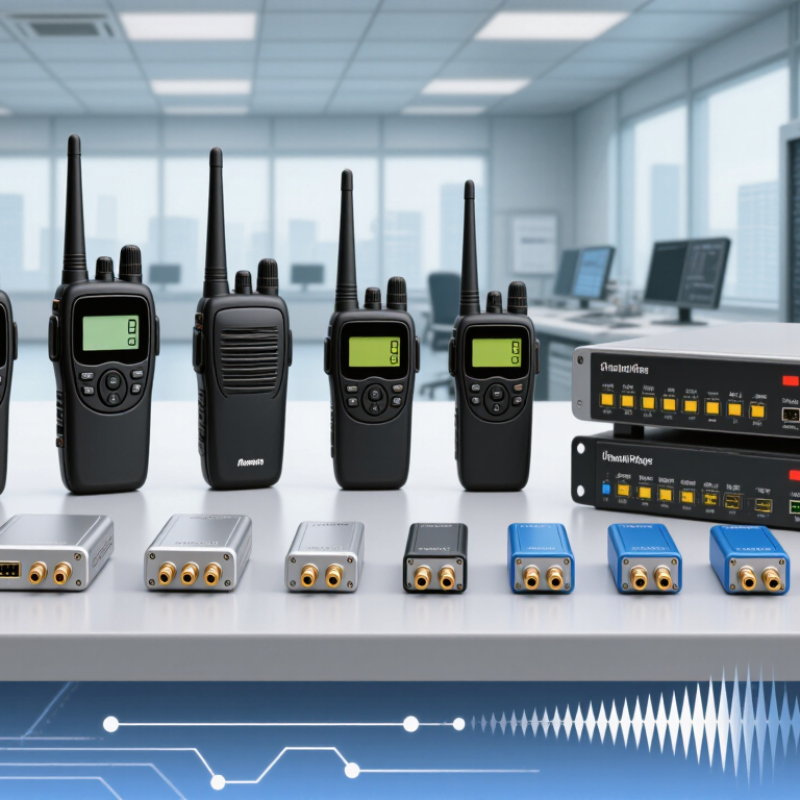
2026 Best RF Communication Devices for Global Buyers
RF communication devices exchange voice or data through radio waves, without a physical cable. Their performance depends heavily on frequency, antenna design, power, and local obstacles. Lower frequencies generally travel farther and penetrate walls better. Higher frequencies can support faster data but often lose strength around buildings and dense vegetation.
VHF commonly serves open areas, farms, and outdoor operations. UHF often performs better inside buildings and crowded urban spaces. However, these are broad patterns, not guarantees. A handheld unit may claim a long range under clear, elevated conditions, while real streets may reduce coverage sharply. Test the device at the actual site. Range claims can be optimistic.
Core functions include push-to-talk voice, group calling, emergency alerts, location data, and short text messaging. Some devices support repeaters or network gateways, extending coverage across large facilities. Check receiver sensitivity, battery endurance, IP protection, antenna options, and audio clarity. Small details matter. A weak microphone can ruin an otherwise capable system.
Global buyers should verify approved frequency bands, output power limits, encryption rules, and certification requirements before importing or deploying equipment. Spectrum rules differ by country, and a legally usable model in one market may require changes elsewhere. I would also question vague specifications. Published data rarely shows performance during rain, concrete obstruction, or heavy network traffic. A short field trial is usually more revealing than a polished product sheet.
RF communication devices operate across different frequency bands. Lower frequencies generally provide longer wavelengths and can support wider-area or beyond-line-of-sight communication, while higher frequencies can provide greater bandwidth but usually require clearer paths between antennas.
Used for long-distance voice and data communication. Ionospheric propagation can extend coverage beyond the local horizon.
Commonly used for terrestrial voice, navigation, and broadcast services. Coverage is mainly line-of-sight with useful diffraction.
Supports mobile radio, positioning, telemetry, and wireless data. Compact antennas and good urban usability are typical advantages.
Used for high-capacity links, radar, and microwave communication. Directional antennas and a clear path are usually important.
Chart values use the approximate wavelength at the midpoint of each internationally recognized frequency band, calculated from the speed of light. Actual operating range depends on transmit power, antenna gain, terrain, atmospheric conditions, interference, and local regulations.
Global RF devices must match regional rules, network plans, and real operating conditions. 3GPP standards support cellular connectivity across many countries, but frequency bands still vary by market. A device designed for one region may lose coverage elsewhere. Check supported bands, carrier certification, roaming options, and release compatibility before purchasing.
Wi-Fi 7 improves throughput, latency, and multi-link performance for demanding indoor networks. However, channel availability differs between countries. Bluetooth 6.0 can support more accurate distance awareness and efficient device discovery, yet performance depends on antenna design and surrounding interference.
LoRaWAN suits low-power sensors with long battery life. Its regional frequency plans and gateway coverage need careful verification.
Tips: Ask for test reports, regional approvals, antenna details, and firmware support periods. Test devices inside concrete buildings and near crowded wireless equipment. Paper specifications can look impressive. Field results may disagree. I have seen small enclosure changes reduce range noticeably. Buyers should also review 3GPP release support, Wi-Fi 7 channel rules, Bluetooth interoperability, and LoRaWAN regional parameters. Standard names alone do not guarantee reliable deployment. Some specifications evolve faster than procurement documents, so confirm the latest official requirements before shipment.
2026 Best RF Communication Devices for Global Buyers
Device Categories Compared by Range, Data Rate, Power, and Latency
Choosing an RF communication device starts with the working distance. Short-range modules suit sensors, meters, and warehouse tools. They often consume little power and respond quickly. Data rates may reach several megabits per second, but walls reduce range sharply. Field tests matter more than optimistic indoor estimates.
Long-range low-power devices support farms, pipelines, and remote monitoring. They can cover several kilometers with suitable antennas and clear placement. However, their data rates are modest, often below one megabit per second. Latency may range from milliseconds to several seconds. Battery life can extend for years, depending on message frequency. This trade-off is easy to underestimate.
High-throughput cellular and satellite terminals move images, voice, and operational data over wider areas. Cellular systems usually offer better data rates and lower latency near strong coverage. Satellite equipment provides broader reach, but power demand, weather, and service availability require careful planning. Mesh networks can improve local coverage, though every relay adds delay and another failure point. I have seen a technically strong design struggle because installers ignored antenna height. That was not a minor mistake. Global buyers should compare transmit power, receiver sensitivity, encryption options, operating temperature, and regional spectrum approval. Datasheets rarely describe every building, hill, or crowded radio channel. Allow testing time, and question any range claim without measured conditions.
| Device Category | Typical Operating Range | Typical Data Rate | Typical Transmit or Device Power | Typical Communication Latency | Coverage or Link Type | Best-Fit Applications | Key Buying Considerations |
|---|---|---|---|---|---|---|---|
| Satellite Messaging Terminal | Global or regional satellite footprint; practical operation requires an unobstructed view of the sky | Approximately 0.1–10 kbps for short messages and tracking data | Approximately 1–5 W during transmission; much lower average power in standby | Approximately 30 seconds to several minutes, depending on satellite visibility and network scheduling | Beyond terrestrial network range | Remote safety messaging, emergency communication, asset tracking, expedition logistics | Subscription availability, sky visibility, antenna orientation, message size, regional service restrictions, and environmental conditions |
| HF Radio Transceiver | Approximately 100–3,000 km; may support longer distances through ionospheric propagation | Approximately 0.3–9.6 kbps for common narrowband data modes | Approximately 5–150 W RF output, depending on equipment and operating mode | Approximately 0.5–10 seconds, excluding retransmissions and propagation changes | Long-distance terrestrial or skywave link; no cellular infrastructure required | Remote field operations, maritime communication, disaster-response backup, government and utility networks | Antenna size, propagation conditions, licensing, frequency coordination, operator training, and interference management |
| VHF/UHF Land-Mobile Radio | Approximately 2–30 km; heavily influenced by antenna height, terrain, and line of sight | Approximately 1.2–12.5 kbps for narrowband voice and basic data; higher rates are possible with specialized systems | Approximately 1–50 W RF output | Approximately 50–300 ms for local push-to-talk communication | Local or regional terrestrial radio network | Public safety, industrial sites, transportation, construction, security, and utility crews | Frequency authorization, repeater placement, channel spacing, interoperability, antenna installation, and local regulations |
| LoRaWAN Sensor Node and Gateway | Approximately 2–15 km outdoors; typically 0.5–3 km in dense urban areas | Approximately 0.3–27 kbps, depending on spreading factor and regional configuration | Approximately 0.05–1 W during transmission; sensor nodes can operate for months or years on batteries | Approximately 0.1–10 seconds; downlink capacity is limited and not intended for continuous real-time traffic | Low-power wide-area network using gateways and sub-GHz or regional ISM spectrum | Environmental sensing, metering, agriculture, smart buildings, logistics, and condition monitoring | Payload size limits, duty-cycle rules, gateway density, regional frequency plan, battery profile, and downlink requirements |
| NB-IoT Module | Approximately 1–15 km from a cellular base station; strong building penetration is possible | Approximately 20–250 kbps, depending on uplink or downlink direction and network conditions | Approximately 0.2–2 W peak transmit power; low average power with power-saving modes | Approximately 1–10 seconds for power-saving or coverage-enhancement scenarios | Wide-area cellular coverage with licensed spectrum | Utility meters, fixed sensors, alarms, parking systems, and low-volume telemetry | Carrier support, SIM or eSIM provisioning, roaming, power-saving behavior, data plans, and module certification |
| LTE-M Module | Approximately 1–10 km from a cellular base station | Approximately 0.3–4 Mbps, depending on network configuration and signal quality | Approximately 0.2–2 W peak transmit power | Approximately 50–150 ms under favorable network conditions | Wide-area cellular coverage with support for mobility and IP connectivity | Mobile asset tracking, wearables, alarms, industrial telemetry, and moderate-volume IoT data | Carrier availability, roaming agreements, antenna design, data-plan cost, mobility support, and certification requirements |
| 5G Sub-6 GHz Router or Modem | Approximately 1–20 km from a base station; actual service distance depends on frequency, terrain, and network density | Approximately 50 Mbps–1 Gbps in typical commercial deployments; higher peak rates may be available | Approximately 2–20 W for a user device or indoor router; outdoor equipment may require more | Approximately 10–30 ms under favorable network conditions | High-speed wide-area cellular network | Fixed wireless access, mobile broadband, industrial networking, video uplink, and edge applications | Supported bands, carrier certification, local coverage, external antenna options, thermal management, and data-plan limits |
| Wi-Fi 6 Access Point or Bridge | Approximately 30–100 m indoors; approximately 100–300 m outdoors with suitable antennas and clear conditions | Approximately 0.6–9.6 Gbps PHY rate; practical throughput is lower and shared among users | Approximately 2–20 W for an access point, depending on radio configuration and power delivery | Approximately 2–20 ms on a well-designed local network | Short-range unlicensed local-area network | Office connectivity, warehouses, campuses, industrial equipment, video, and local device aggregation | Regional spectrum rules, channel congestion, wall attenuation, client compatibility, power delivery, and network security |
| Bluetooth Low Energy Device | Approximately 10–100 m; longer line-of-sight ranges are possible with suitable coded PHY settings | 125 kbps, 500 kbps, 1 Mbps, or 2 Mbps PHY modes | Approximately 0.01–0.2 W during transmission; very low average power for intermittent sensing | Approximately 5–50 ms for local control or sensor exchanges | Short-range personal-area network in the 2.4 GHz band | Wearables, beacons, medical accessories, device commissioning, sensors, and human-interface equipment | 2.4 GHz interference, antenna placement, battery size, connection interval, security configuration, and interoperability |
| Point-to-Point Microwave Link | Approximately 5–50 km per hop with clear line of sight; longer networks require multiple hops | Approximately 100 Mbps–10 Gbps, depending on channel width, modulation, and frequency band | Approximately 5–100 W per radio, excluding tower and ancillary equipment | Usually below 1 ms per link under normal conditions | Fixed line-of-sight terrestrial backhaul | Enterprise backhaul, utility networks, cellular backhaul, campus links, and remote site connectivity | Fresnel-zone clearance, rain fade, tower loading, frequency licensing, antenna alignment, availability target, and path survey |
| UHF RFID Reader and Tag System | Approximately 3–15 m for passive tags; active systems can reach farther | Typically tens to hundreds of kbps for tag identification and inventory data | Reader: approximately 1–30 W depending on regulatory limits and antenna configuration; passive tags have no battery | Typically below 100 ms for a local tag read, depending on inventory density | Short-range reader-to-tag radio link in regional UHF allocations | Warehouse inventory, retail tracking, access control, manufacturing, and library systems | Regional frequency band, reader power limits, tag orientation, metal and liquid interference, read-zone design, and privacy controls |
Technical note: Values are representative engineering ranges rather than guaranteed specifications. Actual performance varies with frequency band, antenna gain, terrain, atmospheric conditions, network loading, regulatory limits, protocol settings, enclosure design, and installation quality. Buyers should verify local spectrum rules, certification requirements, coverage maps, roaming support, and supplier test results before procurement.
2026 Best RF Communication Devices for Global Buyers
Worldwide compliance begins with the exact radio configuration, not the product brochure. A device may support several bands, yet only some channels are legal in a target country. In the European Union, check the Radio Equipment Directive (RED), applicable harmonized standards, and the CE declaration. For the United States, verify FCC authorization, operating frequency, output power, and permitted antenna options. Other markets may require local approval, labeling, or separate importer documentation. Regional spectrum rules can change by indoor use, outdoor use, licensing class, and network type.
Practical buyers should request the technical file, test reports, declaration of conformity, user manual, and firmware details. Compare the tested configuration with the shipment configuration. A different antenna or software setting can affect compliance. During evaluation, measure coverage in realistic spaces, including concrete walls, metal cabinets, and crowded industrial areas. Do not rely only on range claims. They are often optimistic. I have seen procurement plans fail because a legal frequency was available, but the device lacked the required regional setting. That detail matters.
Tips: Confirm the destination country before ordering. Ask whether certification covers the exact model, antenna, power level, and firmware. Check local spectrum databases and regulator guidance. Keep compliance records for customs and audits. A certificate alone may not prove lawful operation in every region.
Link budget is the practical starting point for global RF device selection. It combines transmit power, antenna gain, receiver sensitivity, cable loss, and fade margin. In a steel warehouse, concrete walls can consume margin quickly. Test at the intended distance, not only in an open field. A two-kilometer estimate may collapse indoors. Uncomfortable, but useful. Field measurements should include interference, elevation changes, and poor weather. A larger fade margin usually improves reliability, but it may increase power use and equipment cost.
IP ratings need careful interpretation. IP65 resists dust and water jets, while IP67 supports temporary immersion under defined test conditions. Neither rating guarantees protection from damaged seals, loose connectors, or repeated impacts. Inspect the enclosure after field use. Battery life should reflect the actual duty cycle, not standby performance alone. Ask for runtime with regular transmitting, screen use, location services, and cold-weather operation. Cold weather is often ignored. It deserves attention.
Total cost includes accessories, spare batteries, charging systems, antennas, training, repairs, and software support. Local spectrum requirements may also affect deployment costs. A cheaper device can become expensive when batteries fail early or parts are difficult to source. Even a careful comparison has blind spots. User habits and building materials change results. Use a weighted scorecard, but leave room for field evidence. Reliable procurement is less about impressive specifications and more about measured performance over time.