WORLD electronics offers a complete line of electronic circuit board manufacturing and assembly services, as well as advanced manufacturing services. Our commitment to quality and service is second to no supplier.
Learn MoreOur team of engineers assists you in the development of new designs to optimize quality manufacturability (DFM) and testability, resulting in cost minimization and reduced product development time.
Learn MoreOur flexible manufacturing floor layout and highly trained staff allow for Quick Set-up and Tear Down of small volume prototype runs. This combination grants our customers the benefit of turning new designs quickly and accurately.
Learn MoreWORLD electronics is dedicated to quality. This quality is what underpins our commitment to thorough testing. Our engineers can develop a set of tests that ensure reliability and high performance in all products.
Learn MoreSupply chain management has crossed over from being a narrow management function to being a key operational function.
Learn MoreChoosing the right Air Conditioner Contactor in 2026 requires more than comparing prices or product photographs. Global buyers must examine coil voltage, rated load current, locked-rotor performance, poles, enclosure design, and terminal quality. A compact contactor may look suitable, yet fail inside a hot rooftop unit with frequent compressor cycling.
HVACR educator John Barba offers a practical reminder: “A replacement part is only right when the system conditions support it.” That principle guides this article. We compare contactors for residential, commercial, and light industrial air-conditioning systems. The review considers electrical compatibility, switching durability, thermal performance, installation clarity, supplier documentation, and after-sales support. Standards and certifications also matter, especially when equipment crosses borders.
Small details reveal large differences. Clear markings reduce wiring mistakes. Strong spring pressure supports stable contact closure. Silver alloy contacts may resist wear during repeated compressor starts. Still, no model is perfect. A premium contactor can fail when moisture enters an unsuitable enclosure. A budget unit may perform well in mild conditions but struggle in coastal heat. Buyers should verify local voltage, frequency, certification needs, and replacement dimensions before ordering.
This guide is designed for practical decisions. It does not treat laboratory ratings as the whole story. Field conditions are messier. The best Air Conditioner Contactor balances safety, service life, availability, and total operating cost. That balance can change by region, application, and maintenance quality.
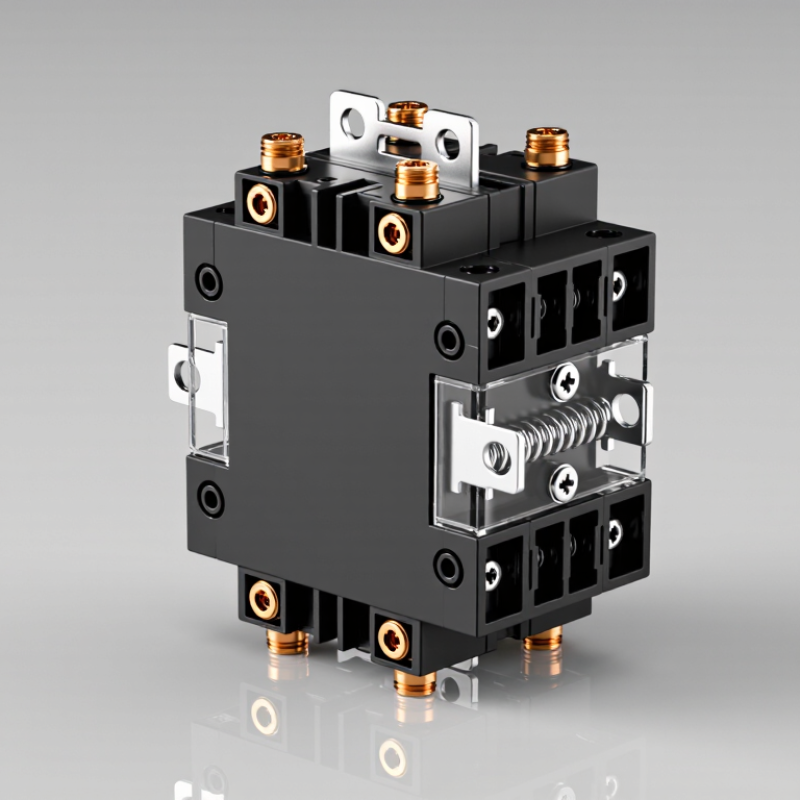
An air conditioner contactor is an electrically controlled switch for starting and stopping compressor or fan motors. A low-voltage coil controls the main power contacts. This arrangement keeps control wiring separate from higher motor current. It is not simply a larger relay. Motor starting creates high inrush current and electrical stress.
IEC 60947-4-1 provides important rules for low-voltage contactors and motor starters. Buyers should check the rated operational current, voltage, frequency, and utilization category. AC-3 is commonly linked with squirrel-cage motor starting and switching during normal operation. The selected contactor must match the compressor’s actual load, not only its running current. Always verify the manufacturer’s test conditions.
Small details matter. Coil voltage may be 24 V, 110 V, 220 V, or another system value. The contact arrangement must suit the equipment design. Auxiliary contacts can support interlocks, alarms, or control feedback. Mechanical durability and electrical durability are different ratings. Mixing them causes confusion.
In practical purchasing checks, terminal spacing, enclosure conditions, ambient temperature, and installation altitude deserve attention. A warm outdoor cabinet can reduce dependable performance. Short cycling may also increase contact wear. I have seen selections based on horsepower alone, and that approach is incomplete. Global buyers should compare IEC data, local electrical requirements, replacement availability, and documented test information. A familiar rating still needs careful verification.
Selecting an air conditioner contactor starts with the motor, not the catalog title. The AC-3 rating must suit the compressor motor’s current and operating voltage. AC-3 covers starting, running, and switching off squirrel-cage motors. Do not match only the contactor’s resistive current. A compressor can draw a sharp inrush current. Check the motor’s rated current, power, duty cycle, and expected starts per hour. In practical panel reviews, undersized contacts often show pitting near the load terminals.
Coil voltage is a separate decision. Confirm the control circuit voltage, frequency, and current type before ordering. A 24 V DC coil cannot replace a 24 V AC coil without checking the control design. Measure the control voltage under load, not only at the transformer output. Small voltage drops matter. Coil suppression may also change response time. This detail is easy to miss.
For 690 V systems, verify the contactor’s rated operational voltage and insulation coordination. Check phase-to-phase clearances, terminal insulation, and the required number of poles. The AC-3 rating must remain valid at 690 V, not merely at 400 V. Coordinate the contactor with an overload relay, fuse, or circuit breaker. Confirm the prospective short-circuit current and the declared coordination type. Field conditions are rarely perfect. Dust, heat, frequent cycling, and loose terminals can reduce service life, so the selection should include realistic derating and a documented verification against local electrical requirements.
2026 Best Air Conditioner Contactor for Global Buyers
Choosing contact capacity means matching real compressor demand, not simply selecting the highest ampere rating. The 9–95 A range covers small split systems, packaged units, and larger commercial equipment. The IEA’s The Future of Cooling report projects cooling electricity demand could more than triple by 2050. UNEP’s 2023 Global Status Report also recorded buildings using about 30% of global energy. Reliable switching equipment will matter more as cooling loads expand.
A 9 A contactor may suit a light-duty compressor, but starting current can reach several times the running current. Check the compressor’s rated-load current, locked-rotor current, voltage, frequency, and duty cycle. Confirm the contactor’s AC utilization category, especially for hermetic refrigeration compressors. A 95 A model may be necessary for a large condenser, yet oversizing alone does not guarantee dependable operation. It can increase cost and complicate panel spacing.
Field checks often reveal the overlooked detail. A 230 V, 50 Hz coil is not automatically suitable for a 208 V, 60 Hz control circuit. Verify auxiliary contacts, terminal temperature ratings, enclosure conditions, and coordination with overload protection. U.S. Department of Energy guidance notes that air conditioning represents roughly 6% of American electricity use. Small efficiency losses can therefore scale quickly. A neat ampere match can still be wrong. Recheck the actual load.
Coil voltage must match the control circuit, not simply the compressor rating. A 24 V AC coil suits many low-voltage thermostats and control transformers. It reduces exposure at the control interface. A 110 V coil fits regions using 100–127 V systems. A 220–240 V coil often connects to higher-voltage control supplies. A 380–415 V coil requires careful checking, because the control voltage may be line-to-line or line-to-neutral. These values are not interchangeable. The wrong coil can chatter, overheat, or fail to pull in.
The International Energy Agency reports that space-cooling energy demand could more than triple by 2050 without efficiency improvements. That trend increases the need for reliable switching and correctly rated components.
For buyers, compare AC-3 current, compressor starting duty, electrical endurance, ambient temperature, and short-circuit coordination. IEC 60947-4-1 provides a useful reference for contactor performance and utilization categories. Field experience also shows a common mistake: selecting by motor voltage alone. I made that mistake during an early panel review. The coil circuit was the real issue.
Tips: Read the wiring diagram before ordering. Confirm coil frequency, such as 50 or 60 Hz. Check whether 24 V means AC or DC. Verify terminal markings and local certification requirements. For 380–415 V systems, measure the actual control supply rather than guessing from the incoming power. A datasheet can look complete, yet omit the detail that matters most.
Evaluating Safety, Certifications, Lifespan, and Global Compatibility
Choosing the best air conditioner contactor starts with the load, not the catalog photo. In field inspections, mismatched coil voltage often causes humming, overheating, or failed starts. Verify the control voltage, pole count, rated current, frequency, and motor duty before ordering. A 24-volt coil cannot replace a 220-volt coil without suitable system changes.
Safety deserves practical attention. Look for clear terminal markings, secure covers, adequate insulation, and a documented short-circuit rating. IEC 60947-4-1 and UL 508 references can support evaluation, but buyers should confirm current certificates and test scope. CE marking alone is not a performance rating. Regional documentation matters. Small details matter.
Lifespan depends on switching frequency, ambient heat, compressor load, and installation quality. Silver-alloy contacts may reduce wear, yet no contactor lasts forever. Ask for mechanical and electrical endurance data, not only a promised service life. Check whether the unit supports local frequencies, mounting dimensions, wire sizes, and replacement parts. Global compatibility also includes language-clear manuals and traceable production records. I would still request sample testing under real voltage and temperature conditions. Laboratory ratings can look excellent, while a dusty rooftop cabinet tells a different story.